(More to the point, do I?)
Frances Garrood raised this question over on the MNW blog. Frances has two fine novels to her credit, and, of course, "two" is the magic number for the Macmillan New Writing imprint, the number beyond which you must move to another imprint within the Pan Macmillan family. On the other hand, if you make that move, it's expected that your editor will go along with you, so the net change may not be all that great.
Back in the golden age of publishing (back when all editors were Maxwell Perkins and all authors were Hemingways, Wolfes, Fitzgeralds, or similar cultural icons; back when 'advances' were just that--a way to keep a writer fed and out of the rain while they finished their latest opus), an author's primary relationship was typically with their editor, and there were many cases of author's moving with their editors, not only between imprints, but from one publishing house to another. Editors nurtured their writers, acting as guide, confessor, friend, drinking buddy, banker, and, I gather, sometimes even doing a spot of editing on the side.
That's the legend (and, like the Arthurian legends, it's more fun to enjoy it without looking too closely into the specifics). Certainly editors dominated the literary landscape and agents played only a minor role. For those of us who have worked with a good editor, this would seem to be the logical state of affairs; after all, if an editor is doing their job, the editor has the most intimate relationship with a novel of anyone excepting the writer.
So, if you're lucky enough to be published at a house where you have an ongoing relationship with a good editor, do you really need an agent?
I'd answer with a definitive maybe yes, maybe no.
When do I think an agent would be useful to someone who has a good editor? Under any of the following circumstances, an agent might be in order even if you're already happily published:
1. You wear many writerly masks. Editors have many jobs beyond gently pointing out our more egregious blunders. One of them, crass as it may sound, is to develop writers as saleable commodities for their publishing houses. Sure, Iain Banks may be able to maintain an identity in two unrelated genres, but I'd bet no editor encouraged him to "branch out" into a wholly new identity. (Ken Follett has said that be received stiff resistance from everyone in publishing when he decided to switch away from his thrillers and write his first historical novel. Hardly surprising.) An editor needs to convince a house to publish a book in the first place, and then needs to cultivate that writer’s success (if any) by building their brand. Encouraging a writer of, say, military fiction to try their hand at a Harlequin romance doesn’t really make much sense for the house, the editor’s career, or most probably for the writer’s career.
Now, to be fair, no agent is likely to greet a writer’s desire to adopt a second genre with cheers of encouragement—unless the writer’s career in their first genre is flagging. But the agent is more likely to be able to go along (perhaps quite grudgingly) with the writer’s mulish, wrong-headed determination, because the agent is in a position to select from all the possible houses and imprints in the wide world to place the book (possibly under a pseudonym); the editor has no such luxury.
So, if you’re foolish enough to have novels in more than one genre, you most likely will need to seek an agent.
2. You have a novel you believe in that has been rejected. If your editor has said no to a book, that doesn’t necessarily mean it shouldn’t be published. It might mean that the editor can’t convince the house of its commercial prospects; it might mean that it doesn’t fit with the way they hope to build you as an author; it might mean that the editor is simply wrong about the book. The why of it doesn’t matter. You have three options open to you: a) Forget about it; b) Get an agent to shop it elsewhere; or, c) Send it over the transom to another publisher.
Forgetting about a book you think deserves a chance is an uncomfortable decision to live with. Tossing it over the transom is fine, but there aren’t many publishers who are open to unagented submissions. If you believe in the book, getting an agent is probably the best course.
3. You need more guidance. The MNW crowd is lucky in that Will Atkins is a flexible, generous editor who is willing to kick around ideas and even offer advice about what you might try next, but he still has to view matters from the perspective of what is possible within the (admittedly large) Pan Mac empire. An agent can take a broader view of your career…if you are so lucky as to acquire an agent whose perspective harmonizes with your own. (Good luck on that.)
4. You just want someone else to talk to. Hey, it’s a lonely business.
5. You want to be able to drop the phrase, “I was talking to my agent the other day…” into conversations. In Southern California, this hints at a connection to the movies and makes you seem more glamorous. In other parts of the country, however, people will probably assume you are talking about your insurance agent.
Note that I prefaced this with “even if you're already happily published.” If you aren’t happy with your publisher, or you feel you could get a far better deal that you are receiving, then you probably need an agent--if nothing else, as a reality check..
In my case, if I wrote only thrillers, I’d be only too happy to avoid the process of seeking representation; so far I’m an instance of Case #1, above—though, living here in the Belly of the Beast as I do, #5 has some appeal.
I’m sure I’ve overlooked some perfectly good reasons. Feel free to supply them.
Showing posts with label publishing. Show all posts
Showing posts with label publishing. Show all posts
Wednesday, August 12, 2009


Wednesday, September 10, 2008
Your Unpublished Novels
Long ago, at least as time is measured in the blogosphere, I posted on the topic of unpublished works and the number of unpublished novels many well-known writers had piled up before they published their debut novel.
In the world of screenwriting, your unsold screenplays are said to be sitting in "your trunk," and are considered to be a possible resource. Writers, a gloomier lot, tend to be a little ashamed of their unpublished novels, and often refer to the place they are stored as a "drawer," which has the virtue of sounding less roomy.
[n.b. In my earlier post, Cate Sweeney wrote to tell me that in Britain "trunks" tended to refer to male swimwear. We use the word in that sense too, though it's a bit dated, but by "What's in your trunk?" folks in Hollywood mean one of those old-fashioned steamer trunks--a giant piece of luggage usually stored in an attic. They aren't really asking what you have in your swimsuit. Or up your elephant's nose.
On the other hand, you can't really solve the problem by instead asking, "What's in your drawers?" Unsold writing is apparently always stored somewhere synonymous with points south of your navel. Go figure.]
In any case, in that post I asked other writers to let on what they had in the way of unpublished works. Matt and Aliya confessed to a number of novels in the drawer. (Lucy McCarraher said her MNW debut was in fact her first novel!)
I was reminded of this when reading one of Emma Darwin's posts some time back, where she mentioned she had completed 8 1/2 novels (very Fellini of her). Since she's published one and has another in the pipeline, I'm wondering where the other 6 1/2 reside and what her intentions are.
In the interests of full disclosure, my novels (in order of composition) and their current status:
Things Unseen: Needs revision, but probably publishable some day. Suffers from 1) Everything-but-the-kitchen-sink first-novel syndrome, as well as 2) Writing-every-day-instead-of-stopping-to-think syndrome.
Tomorrowville: Coming next year. Probably.
A Map of the Edge: Story line has a broken spine. Needs a major overhaul.
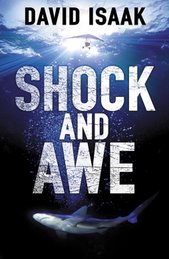
Shock and Awe: Published.
Earthly Vessels: Needs a little work. Might need an agent, but I'm not in the mood to look for one.
Work-In-Progress #1: Half finished. (What I'm planning on sending to MNW next.)
Work-In-Progress #2: Also half finished, and just sitting there.
Work-In-Progress #3: One-quarter finished, and has been sitting there for quite some time. (Of course, since I'm in the middle of W-I-P #1, I'm naturally having exciting ideas about #2 and #3. The grass is always greener, etc...)
Now my question to all: What unpublished works do you have? Are you revising them, or are they abandoned? Do you like 'em, hate 'em...?
I realize those are big and rather personal questions. Feel free to answer on your own blog, of course.
Or feel free to tell me it's none of my damned business.
In the world of screenwriting, your unsold screenplays are said to be sitting in "your trunk," and are considered to be a possible resource. Writers, a gloomier lot, tend to be a little ashamed of their unpublished novels, and often refer to the place they are stored as a "drawer," which has the virtue of sounding less roomy.
[n.b. In my earlier post, Cate Sweeney wrote to tell me that in Britain "trunks" tended to refer to male swimwear. We use the word in that sense too, though it's a bit dated, but by "What's in your trunk?" folks in Hollywood mean one of those old-fashioned steamer trunks--a giant piece of luggage usually stored in an attic. They aren't really asking what you have in your swimsuit. Or up your elephant's nose.
On the other hand, you can't really solve the problem by instead asking, "What's in your drawers?" Unsold writing is apparently always stored somewhere synonymous with points south of your navel. Go figure.]
In any case, in that post I asked other writers to let on what they had in the way of unpublished works. Matt and Aliya confessed to a number of novels in the drawer. (Lucy McCarraher said her MNW debut was in fact her first novel!)
I was reminded of this when reading one of Emma Darwin's posts some time back, where she mentioned she had completed 8 1/2 novels (very Fellini of her). Since she's published one and has another in the pipeline, I'm wondering where the other 6 1/2 reside and what her intentions are.
In the interests of full disclosure, my novels (in order of composition) and their current status:
Things Unseen: Needs revision, but probably publishable some day. Suffers from 1) Everything-but-the-kitchen-sink first-novel syndrome, as well as 2) Writing-every-day-instead-of-stopping-to-think syndrome.
Tomorrowville: Coming next year. Probably.
A Map of the Edge: Story line has a broken spine. Needs a major overhaul.
Shock and Awe: Published.
Earthly Vessels: Needs a little work. Might need an agent, but I'm not in the mood to look for one.
Work-In-Progress #1: Half finished. (What I'm planning on sending to MNW next.)
Work-In-Progress #2: Also half finished, and just sitting there.
Work-In-Progress #3: One-quarter finished, and has been sitting there for quite some time. (Of course, since I'm in the middle of W-I-P #1, I'm naturally having exciting ideas about #2 and #3. The grass is always greener, etc...)
Now my question to all: What unpublished works do you have? Are you revising them, or are they abandoned? Do you like 'em, hate 'em...?
I realize those are big and rather personal questions. Feel free to answer on your own blog, of course.
Or feel free to tell me it's none of my damned business.
Friday, July 4, 2008
Self-publication Urban Legends
It’s like a scene from Night of the Living Dead: you shoot them, they fall down, and then they slowly climb to their feet and stagger towards you once more. Yes, I’m talking about internet misinformation about surprising self-publication success. I’m sure you’ve heard them before:
1. John Grisham self published his first novel and sold it out of the back of his car.
2. Robert James Waller’s Bridges of Madison County was self-published, and Waller actually sold it door-to-door
3. Christopher Paolini wrote and self-published his bestselling novel Eragon at age 15, and created a brilliant self-publicity campaign
4. After his first novel was rejected by every publisher in New York City, Tom Clancy decided to publish it himself and it became an instant bestseller.
Etc. Sigh.
Grisham’s first novel.
No, John Grisham’s first (and possibly best) novel, A Time to Kill, wasn’t self-published. Wynwood Press published it, and paid Grisham a $15,000 advance. The print run was 5,000 copies. Sales were sluggish, and Grisham bought at least a thousand of those copies and—yes, as the legend says—sold them out of his car and wherever else he could. (Who wants 50%+ remainders on their resume?)
If you happen to have signed first editions, they fetch about $4,600 these days. Grisham should have kept the copies he bought and signed them.
The Bridges of Madison County.
I’m not quite sure how this persistent legend began. Waller’s earlier works were all published by University of Iowa Press, but when he wrote Bridges of Madison County, he sent it to one of the top agents in the US, Aaron Priest, who sold it to the third publisher that saw it, Warner Books. (How the “door-to-door” aspect of this story emerged is a real mystery.)
Christopher Paolini’s Eragon.
This is a particularly messy story, as parts of it have been misstated over and over again, and Paolini himself has given interviews where he makes slightly misleading statements to embellish the Cinderella aspects of the legend.
Paolini finished home-schooling high school at age 15 and began writing Eragon some time after that. He didn’t write and publish it at age 15; the writing itself took a number of years.
His parents owned and operated the small press Paolini International LLC, which was established in 1997 (Eragon was published in 2002), and had already published a number of nonfiction books. His parents edited and revised the manuscript and then printed 10,000 copies.
They used their existing publishing connections to get the book in local bookstores, and also arranged and financed—and brought the family along—on his book tour. The real Cinderella moment came when Carl Hiassen’s stepson Ryan Lindberg read the book and raved about it to Hiassen, who contacted his publisher, Knopf, about the book.
It’s a pretty amazing story even without embellishment. But it’s not exactly a story about self-publishing. (Do your parents happen to own a small publishing company, and are they willing to sink, what--$30,000?…$60,00?—into printing and promoting your book? And, while we’re at it, are you done with school and also not working?)
Tom Clancy’s first novel
The Hunt for Red October—the only Clancy novel I’ve enjoyed—was in fact turned down by many publishers before it was published by the Naval Institute Press. Although this was itself an unusual development (NIP had just decided to branch out into fiction when Clancy’s book arrived), it’s a long ways from self-publishing. There is a considerable difference between the personal finances and marketing clout of an insurance salesman (Clancy) and the United States Navy (the publisher).
As an irrelevant aside, despite all the pictures of Clancy in fatigues beside or astride various pieces of military ironmongery, he never served in the military. Hey, it’s fiction, okay?
I have nothing against self-publishing (though I’d be disinclined to try it myself; it's enough trouble to write the damn things). But what puzzles me is that the legends persist when there are so many true success stories out there. The redoubtable MJ Rose really did self-publish her first novel as an e-book and used the sales and buzz to hook up with a major publishing house. Zane really did start out self-publishing erotica on the web, and then in book form, before Pocket Books picked her up. Gay Afro-American writer E. Lynn Harris really did self-publish his first novel and sell about 10,000 copies through beauty salons and impromptu signings before he hit the big time. And there are plenty of self-published nonfiction books (well, arguably nonfiction) such as The Celestine Prophecy or The Christmas Box, that were later picked up and promoted into bestsellerdom.
So do we really need the Grisham/Waller/Paolini/Clancy legends?
Sunday, June 15, 2008
Mad Dogs, Englishmen, Golfers, and the Occasional Writer
 In the last post, from far out in the desert, I promised pictures.
Above is a picture that is not from the desert, but from my little town of Huntington Beach just before we left. The jacarandas are in bloom, and here's the parking lot at a local school. (I always like the jacarandas a little later than this, when they have covered the ground in solid purple, but I didn't have time to wait for that.)
It was a lovely 75 F when I snapped that shot in HB, but out in the desert it got up to 112 F, which is a bit on the warm side. Rancho Mirage is just a little inland of Palm Springs, and Palm Springs is a lovely place to visit in December, but why anyone would live there year-round is a mystery to me.
Nonetheless, there are people out there in the summer. Not only out there, but engaging in physical activities such as golf. Not I. All I could manage during the daytime was to sit in my airconditioned room and tap fitfully at my keyboard.
To give a point of reference, here's a shot of the grounds of the Rancho Las Palmas Hotel. (The writing retreat was originally set out here, a quarter-century ago, because it was so cheap during the summer. No more. Now there's golfers, and that involves money.)

I admit it's a nice-looking facility. And those mountains to the rear are part of the huge Santa Rosa Wilderness Area, where you can travel for days and see nothing but a few Bighorn Sheep. But, once again, not a place to go in the summer.
But, enough of trivial matters such as recreation and geography and physical survival. On to important issues such as publication. As I mentioned, RN Morris has bullied his way onto American turf once more, making a mockery of our Revolution and exposing us once more to the threat of taxation without representation. And the people at Penguin USA have seen fit to distribute his book far and wide--even unto the uninhabitable desert.
And here's visual proof: Two admiring fans at the Rancho Mirage Borders...

...and a half-dozen copies sitting on the New Mystery shelves at the Barnes & Noble's in Palm Desert (third shelf down in the pic).

Congrats, Roger. Your plans for World Domination are moving ahead smoothly.
(At least they didn't insist on retitling it "The" Vengeful Longing...)
Wednesday, May 7, 2008
The 2008 Orange Prize Shortlist

Well, this isn't exactly breaking news--somehow the Prize Committee neglected to ring me up and tell me--but Patricia Wood, author of the funny and touching novel Lottery (and sometime visitor to this blog), has been shortlisted for the Orange Prize.
Since the Orange Prize is for women only, some of us shouldn't be expecting to ever see our names on that list, no matter what we write. But despite its gender discrimination, it's still a great prize, and generally shows better taste in its selection than some other prizes I could name. For example, a few years back, it picked Ann Patchett's Bel Canto, a novel I've forced on anyone who would sit still. This year, in addition to Patricia's well-deserved nomination, Rose Tremain--one of my favorite authors (The Way I Found Her is a masterpiece)--is also on the shortlist. So I have two horses in this race.
(But I confess I'm rooting for Patricia, because hers is a debut novel. And because I know her, at least in cyberspace--see the link on the sidebar under Cool Writers? And because she manages to visit Absolute Write every so often without losing her patience, which deserves some sort of prize all by itself.)
What? You haven't read Lottery? There's still time. That cover image up in the corner--of the somewhat-more-garish UK edition--will take you to the book on Amazon UK. The hardback is still in the stores in the US. And, for those of you who are inclined to pinch pennies, I believe a paperback edition is due out in a month or so.
Go, Patricia!
Sunday, March 9, 2008
No Such Thing as Bad Publicity
Remember James Frey, the guy who wrote the partially faked memoir A Million Little Pieces? (After Frey said the book was 95% true, David Thayer remarked that this still left 950,000 real Little Pieces, which he thought was quite a lot.)
Harper is publishing Frey's new novel this summer, with a claimed 350,000 print run. There was speculation that he had also placed a collection of short stories. According to the New York Times:
Well, okay, we already knew Mr. Frey had some issues with telling the truth.
Faked memoirs seem to be popular; a woman named Margaret Seltzer just went down for one last week. But I suspect fake memoirs will be even more popular now—Mr Frey has demonstrated they seem to be a good route to getting a top agent and a big publishing deal for your novel.
On the other hand, Laura Albert, who wrote two novels under the pen name JT Leroy, was successfully sued for hundreds of thousands of dollars—because the publisher (and production company who optioned his/her books) knew that what she was writing was fiction, but bought the books in the belief that their author was a more interesting person than the author actually was.
Now, let me get this straight:
1) Frey lies in a book claimed to be non-fiction, and is rewarded with a huge fiction contract.
2) Laura Albert sells a novel and gets saddled with a massive debt because she, the author, isn’t as interesting as the person they believed the author to be.
Is it just me, or is that messed up?
DISCLAIMER: For the record, I would just like to assert that neither I, nor any of the fiction-writing visitors to this site, are interesting people in any way whatsoever, nor have we ever represented ourselves as being interesting people. Should anyone ever buy any of our novels, or procure the rights to them, or even happen to glance at them in a bookstore, they should not do so under the mistaken impression that we, ourselves, the writers, are interesting. We are dull as dirt, which is why we sit in rooms by ourselves making up stories about our imaginary friends. You can find more interesting things than us under your sofa cushions. Do not under any circumstances buy our novels, no matter how exciting they may be, under the illusion that we, ourselves, must be even more exciting. We are somewhat less sexually attractive than Yoda (though we have better syntax and some of us, at least most of the women, have less hair growing out of our ears); we are less witty than the defensive line of an American football team; and we are slightly less charming and socially adriot than a herd of flatulent hippos. So, even if our novels happen to be exciting or interesting, you have no grounds for taking legal action against us in the belief that we, ourselves, ought to be more interesting. We aren’t, and we warned you in advance, so there are no grounds to sue any of us. The days of the wild bohemian artist is long gone.
[Note to other novelists: We’re having another get-together here. Drinks, nose-candy, and exotic snacks will be provided free, but if you need any “equipment” you’ll have to bring it yourselves. Although we discard any left-behind needles, please do check the lost and found before leaving—we’ve got four pairs of thigh-high boots, a whole wad of thongs (we laundered them), and any number of rather unique, um, devices, none of which fit us. And, please: be considerate. If you insist on going all Sylvia Plath, please do it elsewhere—our oven is electric, and many of our guests need to get home to relieve the babysitter, and don’t have time for yet another police inquest! ]
Harper is publishing Frey's new novel this summer, with a claimed 350,000 print run. There was speculation that he had also placed a collection of short stories. According to the New York Times:
Reached by telephone before the announcement, Mr. Frey denied rumors that he had sold a short story collection, saying, “I have never written a short story in my life.”
But Mr. Frey published a short story last fall in a catalog for an exhibition by Malerie Marder, a Los Angeles-based artist.
Well, okay, we already knew Mr. Frey had some issues with telling the truth.
Faked memoirs seem to be popular; a woman named Margaret Seltzer just went down for one last week. But I suspect fake memoirs will be even more popular now—Mr Frey has demonstrated they seem to be a good route to getting a top agent and a big publishing deal for your novel.
On the other hand, Laura Albert, who wrote two novels under the pen name JT Leroy, was successfully sued for hundreds of thousands of dollars—because the publisher (and production company who optioned his/her books) knew that what she was writing was fiction, but bought the books in the belief that their author was a more interesting person than the author actually was.
Now, let me get this straight:
1) Frey lies in a book claimed to be non-fiction, and is rewarded with a huge fiction contract.
2) Laura Albert sells a novel and gets saddled with a massive debt because she, the author, isn’t as interesting as the person they believed the author to be.
Is it just me, or is that messed up?
DISCLAIMER: For the record, I would just like to assert that neither I, nor any of the fiction-writing visitors to this site, are interesting people in any way whatsoever, nor have we ever represented ourselves as being interesting people. Should anyone ever buy any of our novels, or procure the rights to them, or even happen to glance at them in a bookstore, they should not do so under the mistaken impression that we, ourselves, the writers, are interesting. We are dull as dirt, which is why we sit in rooms by ourselves making up stories about our imaginary friends. You can find more interesting things than us under your sofa cushions. Do not under any circumstances buy our novels, no matter how exciting they may be, under the illusion that we, ourselves, must be even more exciting. We are somewhat less sexually attractive than Yoda (though we have better syntax and some of us, at least most of the women, have less hair growing out of our ears); we are less witty than the defensive line of an American football team; and we are slightly less charming and socially adriot than a herd of flatulent hippos. So, even if our novels happen to be exciting or interesting, you have no grounds for taking legal action against us in the belief that we, ourselves, ought to be more interesting. We aren’t, and we warned you in advance, so there are no grounds to sue any of us. The days of the wild bohemian artist is long gone.
[Note to other novelists: We’re having another get-together here. Drinks, nose-candy, and exotic snacks will be provided free, but if you need any “equipment” you’ll have to bring it yourselves. Although we discard any left-behind needles, please do check the lost and found before leaving—we’ve got four pairs of thigh-high boots, a whole wad of thongs (we laundered them), and any number of rather unique, um, devices, none of which fit us. And, please: be considerate. If you insist on going all Sylvia Plath, please do it elsewhere—our oven is electric, and many of our guests need to get home to relieve the babysitter, and don’t have time for yet another police inquest! ]
Friday, March 7, 2008
Tomorrowville: My Evil Twin
I can't live with myself...so I guess I'll have to move next door. It's one of the prices you pay for multiple-personality disorder.
Back in the day, they used to have a commercial for L&M, "A cigarette for the two of you." The two of me? (How did they know?)
But, it's official: there's now two of me. By day, I'm wealthy socialite playboy David Isaak, but when night falls and the Bat Signal shines in the skies above Gotham, I'm
David Underhill. David G. Underhill.

<==========That weird-looking guy over there.
And what, you ask (or ought to ask, which is why I'm asking on your behalf) does the "G" represent?
At the risk of sounding like a Sue Grafton novel, "G" is for "Godot." David Godot Underhill. (Why "Godot"? Because I've been waiting forever for Tomorrowville to be published. The book takes place in 2088; I was beginning to wonder if it would see print before then.)
Other noms de plume (or do I mean les noms de plume de ma tante?) were attractive. David G. Montblanc was caroling its siren song (or do I mean sirening its carol song?), but that was too silly even for me. Slightly. And variations on David Isaak like Isaac Davidson (which topped Janet's list) were also appealing, but a cardinal rule of tradecraft is when possible to change your surname but keep your first name, so that you still answer, "Yes?" when people shout out your first name. (Those of an analytical frame of mind will object that I also would probably respond if someone shouted, "Isaac!" True. But it would make me feel as though I were in gym class.)
Though, come to think of it, when someone shouts out "David!", half the men in the room over the age of 40 turn around. Of course, it's even more extreme if you shout "Jennifer!"
I used to work closely with a gay couple who were both named David, which resulted in interoffice phone calls that ran, "Hi, David, this is David. Is David around?" They told me they had gone to dinner with friends once and ended up with a total of seven people at the table--all named David.
There has been a lot of talk lately about differences in how Clinton and Obama are going about courting the Hispanic vote. To heck with that. If either of them could capture the "Jennifer" vote and add in a majority of the "Davids", they'd ensure a landslide victory.
There was a moratorium on Davids beginning in the mid-1970s, along with a move to phase out lead in gasoline (is there a connection? Might be...), but the Davidophilia virus is infecting a new generation of parents (most of them named Jennifer or Jessica and Jason or Jacob--"Gen J"). In 2007 "David" was back up to number thirteen on the list of most popular baby names in the US. Already I'm hearing mothers at Starbucks shout, "David! You sit down and behave!" And, of course, I promptly do.
So, I'm sticking to "David". Though you can call me "DG" now, if you like.
…leave the name of Baggins behind you. The name will not be safe to have, outside the Shire or in the Wild. When you go, go as Mr. Underhill.
And so I shall.
Back in the day, they used to have a commercial for L&M, "A cigarette for the two of you." The two of me? (How did they know?)
But, it's official: there's now two of me. By day, I'm wealthy socialite playboy David Isaak, but when night falls and the Bat Signal shines in the skies above Gotham, I'm
D.G. Underhill
David Underhill. David G. Underhill.

<==========That weird-looking guy over there.
And what, you ask (or ought to ask, which is why I'm asking on your behalf) does the "G" represent?
At the risk of sounding like a Sue Grafton novel, "G" is for "Godot." David Godot Underhill. (Why "Godot"? Because I've been waiting forever for Tomorrowville to be published. The book takes place in 2088; I was beginning to wonder if it would see print before then.)
Other noms de plume (or do I mean les noms de plume de ma tante?) were attractive. David G. Montblanc was caroling its siren song (or do I mean sirening its carol song?), but that was too silly even for me. Slightly. And variations on David Isaak like Isaac Davidson (which topped Janet's list) were also appealing, but a cardinal rule of tradecraft is when possible to change your surname but keep your first name, so that you still answer, "Yes?" when people shout out your first name. (Those of an analytical frame of mind will object that I also would probably respond if someone shouted, "Isaac!" True. But it would make me feel as though I were in gym class.)
Though, come to think of it, when someone shouts out "David!", half the men in the room over the age of 40 turn around. Of course, it's even more extreme if you shout "Jennifer!"
I used to work closely with a gay couple who were both named David, which resulted in interoffice phone calls that ran, "Hi, David, this is David. Is David around?" They told me they had gone to dinner with friends once and ended up with a total of seven people at the table--all named David.
There has been a lot of talk lately about differences in how Clinton and Obama are going about courting the Hispanic vote. To heck with that. If either of them could capture the "Jennifer" vote and add in a majority of the "Davids", they'd ensure a landslide victory.
There was a moratorium on Davids beginning in the mid-1970s, along with a move to phase out lead in gasoline (is there a connection? Might be...), but the Davidophilia virus is infecting a new generation of parents (most of them named Jennifer or Jessica and Jason or Jacob--"Gen J"). In 2007 "David" was back up to number thirteen on the list of most popular baby names in the US. Already I'm hearing mothers at Starbucks shout, "David! You sit down and behave!" And, of course, I promptly do.
So, I'm sticking to "David". Though you can call me "DG" now, if you like.
…leave the name of Baggins behind you. The name will not be safe to have, outside the Shire or in the Wild. When you go, go as Mr. Underhill.
And so I shall.
Tuesday, February 19, 2008
Tomorrowville II: The Europeans
I try not to get my undies overly knotted about the state of justice in Islamic countries west of Malaysia. (From Malaysia on east, they tend to be a little less whacko.) I've spent a lot of time in Islamic countries, from sensible places like Indonesia to out-of-their-frigging-minds places like--well, you name it. And I try to keep my head down and not offend local custom.
I assume that by now pretty much everyone has heard about the American woman arrested in the Starbucks in Saudi Arabia for sitting--gasp--with unrelated male work colleagues while working on their laptops. Although she was wearing robes, a headscarf, and the rest of that medieval claptrap. she was, according to her account, jailed for five hours, strip-searched, humilated, and threatened. I don't see why the international press is making such a huge deal out of it.
Get a little perspective. It was just a woman. Plus, according to the Saudis, it was all in accord with Sharia law, and who are we to impose our imperialist view of human rights on a sovereign nation?
This sort of thing goes on all the time in the Mideast; the only reason this relatively mild case caught international attention is that the woman was an American citizen.
And the only reason it caught my personal attention, really, was that it was so closely timed with the Archbishop of Canterbury's suggestions that Sharia law needs to be accomodated in the UK. (Keep me posted on this, will you? No matter what I hear, I plan to be damn careful where I sit when I next buy coffee in London.)
Sharia law as enforced under traditional practice makes perfect sense. If a woman is raped, for example, I think it only logical that her relatives should murder her so as to expunge the stain on their honor. And I also think it stands to reason that anyone who criticizes the murder of such rape and murder victims--as Theo Van Gogh was so rash to do--should also be murdered. As should cartoonists who dare to point out the hypocrisy of the whole situation. In addition, I admit it's only right that anyone who refers to how Sharia actually works in practice in most of the world should be condemned by European and American Muslims for providing a distorted view of Islam, which is, as we all know, a religion of peace. A tolerant, progressive society needs to make room for these alternative views of morality, right?
My novel Tomorrowville is a nasty little comedy about the United States in 2088--an increasingly totalitarian, self-indulgent country powered by industries run on prison labor and controlled by a massive Homeland Security infrastructure. Economic growth has slowed, and relations with Europe have been all but severed; there are even two separate internets, and almost no transatlantic travel. The closest ally of the US is China. But some people in the United States maintain romantic notions about Europe...
This is the first occasion I've felt the urge to write a sequel to a novel. And this time round--thanks be to the Archbishop!--I suspect my main characters will be escaping from the US and visiting Europe. (Come to think of it, by the end of Tomorrowville, one of them has already left for Paris...)
The Day After Tomorrowville. I have a couple of other books to write first, but this one sounds like fun.
I assume that by now pretty much everyone has heard about the American woman arrested in the Starbucks in Saudi Arabia for sitting--gasp--with unrelated male work colleagues while working on their laptops. Although she was wearing robes, a headscarf, and the rest of that medieval claptrap. she was, according to her account, jailed for five hours, strip-searched, humilated, and threatened. I don't see why the international press is making such a huge deal out of it.
Get a little perspective. It was just a woman. Plus, according to the Saudis, it was all in accord with Sharia law, and who are we to impose our imperialist view of human rights on a sovereign nation?
This sort of thing goes on all the time in the Mideast; the only reason this relatively mild case caught international attention is that the woman was an American citizen.
And the only reason it caught my personal attention, really, was that it was so closely timed with the Archbishop of Canterbury's suggestions that Sharia law needs to be accomodated in the UK. (Keep me posted on this, will you? No matter what I hear, I plan to be damn careful where I sit when I next buy coffee in London.)
Sharia law as enforced under traditional practice makes perfect sense. If a woman is raped, for example, I think it only logical that her relatives should murder her so as to expunge the stain on their honor. And I also think it stands to reason that anyone who criticizes the murder of such rape and murder victims--as Theo Van Gogh was so rash to do--should also be murdered. As should cartoonists who dare to point out the hypocrisy of the whole situation. In addition, I admit it's only right that anyone who refers to how Sharia actually works in practice in most of the world should be condemned by European and American Muslims for providing a distorted view of Islam, which is, as we all know, a religion of peace. A tolerant, progressive society needs to make room for these alternative views of morality, right?
My novel Tomorrowville is a nasty little comedy about the United States in 2088--an increasingly totalitarian, self-indulgent country powered by industries run on prison labor and controlled by a massive Homeland Security infrastructure. Economic growth has slowed, and relations with Europe have been all but severed; there are even two separate internets, and almost no transatlantic travel. The closest ally of the US is China. But some people in the United States maintain romantic notions about Europe...
This is the first occasion I've felt the urge to write a sequel to a novel. And this time round--thanks be to the Archbishop!--I suspect my main characters will be escaping from the US and visiting Europe. (Come to think of it, by the end of Tomorrowville, one of them has already left for Paris...)
The Day After Tomorrowville. I have a couple of other books to write first, but this one sounds like fun.
Tuesday, February 12, 2008
From the desk of N. Cognito
As it turns out, neither of my publishers wants there to be confusion between David Isaak and David Whoever, so we're back on the pen name trail again.
So, what are the names of some pens? David Sheaffer? David Cross? David Biro? David Bic? Or, to take a page from Len Montblanc-Meisterstück (nee LC Tyler), David Montblanc? Other pen possibilities:
Acme
Aurora
Bexley
Castell
Faber
Fisher
Parker
Pelikan
Waterman
Yard-O-Led
David Yard-O-Led is appealing, but perhaps a bit distracting.
There are also the generic foreign-language terms for pen:
Pero
Boligrafo
Plume
Psani
Scrittura
Stylo
but they all sound a touch, well, foreign.
Quiller? Penner? Scribner/Scrivener?
I've always admired Anne Rice's pen name for her S&M porn, AN Roquelaure, which is a slightly archaic French term for "cloak". And perhaps I could get somewhere with "Henshin" which sounds valid enough but is Japanese for "disguise". Anyone have any obscure and interesting words for "disguise," "cloak", or "mask"? (No, David Persona doesn't seem to work.)
Anagrams are always good, but I think "Isaak" has too many vowels. I can't turn it into anything. Maybe I could adopt Iain Banks' first name and add that into the mix: Iain Isaak = aaa iii k n s. If nothing else, I could form a Hawaiian place name, like Ka'a'ani'isi. (Not quite right--Hawaiian has no "s".)
Though "Sanders" was good enough for Pooh, it's a little generic.
At the moment, I'm leaning towards a tip of the hat to JRR Tolkein: the name Isaak isn't to be mentioned outside The Shire, so I'll go traveling by the name of Underhill. David Underhill. DT Underhill.
Or, since so many fantasy writers have three first names (JRR Tolkein. George RR Martin, MFW Curran), maybe I need three initials: A.B.C. Biro. David R.R. Montblanc. I.M.A. Yard-O-Led.
I always liked George Harrison's pseudonym when he played on the Cream song Badge: L'Angelo Misterioso. But it's been done.
Or perhaps the name is Bond. James Bond. That's got a certain ring to it.
So, what are the names of some pens? David Sheaffer? David Cross? David Biro? David Bic? Or, to take a page from Len Montblanc-Meisterstück (nee LC Tyler), David Montblanc? Other pen possibilities:
Acme
Aurora
Bexley
Castell
Faber
Fisher
Parker
Pelikan
Waterman
Yard-O-Led
David Yard-O-Led is appealing, but perhaps a bit distracting.
There are also the generic foreign-language terms for pen:
Pero
Boligrafo
Plume
Psani
Scrittura
Stylo
but they all sound a touch, well, foreign.
Quiller? Penner? Scribner/Scrivener?
I've always admired Anne Rice's pen name for her S&M porn, AN Roquelaure, which is a slightly archaic French term for "cloak". And perhaps I could get somewhere with "Henshin" which sounds valid enough but is Japanese for "disguise". Anyone have any obscure and interesting words for "disguise," "cloak", or "mask"? (No, David Persona doesn't seem to work.)
Anagrams are always good, but I think "Isaak" has too many vowels. I can't turn it into anything. Maybe I could adopt Iain Banks' first name and add that into the mix: Iain Isaak = aaa iii k n s. If nothing else, I could form a Hawaiian place name, like Ka'a'ani'isi. (Not quite right--Hawaiian has no "s".)
Though "Sanders" was good enough for Pooh, it's a little generic.
At the moment, I'm leaning towards a tip of the hat to JRR Tolkein: the name Isaak isn't to be mentioned outside The Shire, so I'll go traveling by the name of Underhill. David Underhill. DT Underhill.
Or, since so many fantasy writers have three first names (JRR Tolkein. George RR Martin, MFW Curran), maybe I need three initials: A.B.C. Biro. David R.R. Montblanc. I.M.A. Yard-O-Led.
I always liked George Harrison's pseudonym when he played on the Cream song Badge: L'Angelo Misterioso. But it's been done.
Or perhaps the name is Bond. James Bond. That's got a certain ring to it.
Monday, January 7, 2008
Roger Goes Pro
Now, here's a real newsflash: Roger (RN) Morris has announced that he has retired from his dayjob to become a fulltime writer. Not bad for a fellow who published his first novel less than two years ago. Indeed, on reflection, not bad for anyone in this crazy business.
Then again, I can't think of anyone more deserving.
Then again, I can't think of anyone more deserving.
Thursday, November 15, 2007
What Would You Do If You Were Me? Part I
(Or rather, if you were I? which sounds incredibly awkward. Or, were you I? which is stilted to the point of being bad imitation Shakespeare. Who We Would Be Were You I and other collected poems, by Jonas J. Scribbler.)
So, to put it into Americanese, What Wouldja Do If You Was Me?
No wisecracks, please. No plastic-surgery jibes, no suggestions that I take the cloth, no observations about the eternal rest that can be achieved in a warm bath with the assistance of a sharp blade twisted under the veins in the wrist. Or at the minimum, keep them to yourself and anybody else in the room with you as you read this. Please don't share your merriment. ;-} (Don't you loathe smileys?)
Hey, I never intended to become a thriller writer. I haven’t read many thrillers, and most of them I’ve read were experiences I could easily have lived without. I adore Graham Greene and John Le Carre, of course, and some of Lee Child is exhilarating (if nothing else to see how many sentence fragments can be squeezed into a paragraph without being distracting. Plenty. Many frags. All over the place. Lots. All you need to accomplish Lee Child’s purpose. And then some.) But I’ve probably read less in the thriller genre than in any category apart from romance.
But the topics I needed to grapple with in Shock and Awe only amounted to a story in a thriller framework. So I wrote it that way. And now it turns out I’m a Thriller Writer.
No, really. I’m now a dues-paying member of the International Thriller Writers with my own page, right next to Susan Isaacs in the list (whom, as it turns out I have read, starting way way back with her funny novel Compromising Positions--hi, Susie!). And I’m now a member of the UK-based Crime Writers Association. (And they're a good bunch; they quite justifiably shortlisted Brian McGilloway’s Borderlands on a very short list for best debut novel, which shows damned good taste.) Crime Writer? Thriller Writer? I’m okay with it.
I have any number of things I want to write that fit into the thriller genre in some approximate fashion, though it's the kind of approximate that might result in a starfish on top of your Christmas tree. But Thriller Hotel isn’t an address I mind checking into. These days, I consider being allowed to sleep indoors with the humans to be a big step up in life. (Though the fellow who led me to my room said I could call him Procrustes. Name seems familiar somehow…Did he used to be on TV?)
It’s not that I can’t write thrillers (I hope). It’s not that I dislike writing thrillers. It’s just that I already have these other non-thriller books lying about the house, and they don’t fit with the persona/brand/expectations of a book by that "David Isaak" guy. They aren’t a logical follow-on to Shock and Awe. They’re the sort of thing someone might take as a debut novel…but I’m no longer a debutante. (Male form “debutant”, but no one has ever used that word outside of the dictionary.) I’m not a deb any more. I’m a—well, what the hell do you call me after my coming-out party plus forty-five seconds of mad passion in the back of a Ford Cortina? (That was rhetorical. Don’t answer that question or I’ll punch your lights out.)
So, here’s the question for y’all: If I have these books Macmillan won’t want because they don’t fit my brand (and because I’d have to be an even bigger nutcase than I already am to want them to publish them under my name), what do I do with them? Forget them? Sell them for firewood? Publish them in a small way under a pen name? (I’ve already had an editor at a small press ring my doorbell about one of them.) Try and get a new agent and create a parallel career (which Roger Morris has done with resounding success as RN Morris)? And, if I’m going to go back to agent-seeking, should I look for an agent in the UK or in the US? (And are you aware that most UK agents have adopted a policy of charging 15% for UK residents, but 20% for us wogs? [The wogs start at Calais, or so I’ve been told.])
More on this dilemma (Trilemma? Quadrilemma?) soon.
I’m sure you’re just a-quiver with anticipation. Us thriller writers know how to build the suspense, don't we?
So, to put it into Americanese, What Wouldja Do If You Was Me?
No wisecracks, please. No plastic-surgery jibes, no suggestions that I take the cloth, no observations about the eternal rest that can be achieved in a warm bath with the assistance of a sharp blade twisted under the veins in the wrist. Or at the minimum, keep them to yourself and anybody else in the room with you as you read this. Please don't share your merriment. ;-} (Don't you loathe smileys?)
Hey, I never intended to become a thriller writer. I haven’t read many thrillers, and most of them I’ve read were experiences I could easily have lived without. I adore Graham Greene and John Le Carre, of course, and some of Lee Child is exhilarating (if nothing else to see how many sentence fragments can be squeezed into a paragraph without being distracting. Plenty. Many frags. All over the place. Lots. All you need to accomplish Lee Child’s purpose. And then some.) But I’ve probably read less in the thriller genre than in any category apart from romance.
But the topics I needed to grapple with in Shock and Awe only amounted to a story in a thriller framework. So I wrote it that way. And now it turns out I’m a Thriller Writer.
No, really. I’m now a dues-paying member of the International Thriller Writers with my own page, right next to Susan Isaacs in the list (whom, as it turns out I have read, starting way way back with her funny novel Compromising Positions--hi, Susie!). And I’m now a member of the UK-based Crime Writers Association. (And they're a good bunch; they quite justifiably shortlisted Brian McGilloway’s Borderlands on a very short list for best debut novel, which shows damned good taste.) Crime Writer? Thriller Writer? I’m okay with it.
I have any number of things I want to write that fit into the thriller genre in some approximate fashion, though it's the kind of approximate that might result in a starfish on top of your Christmas tree. But Thriller Hotel isn’t an address I mind checking into. These days, I consider being allowed to sleep indoors with the humans to be a big step up in life. (Though the fellow who led me to my room said I could call him Procrustes. Name seems familiar somehow…Did he used to be on TV?)
It’s not that I can’t write thrillers (I hope). It’s not that I dislike writing thrillers. It’s just that I already have these other non-thriller books lying about the house, and they don’t fit with the persona/brand/expectations of a book by that "David Isaak" guy. They aren’t a logical follow-on to Shock and Awe. They’re the sort of thing someone might take as a debut novel…but I’m no longer a debutante. (Male form “debutant”, but no one has ever used that word outside of the dictionary.) I’m not a deb any more. I’m a—well, what the hell do you call me after my coming-out party plus forty-five seconds of mad passion in the back of a Ford Cortina? (That was rhetorical. Don’t answer that question or I’ll punch your lights out.)
So, here’s the question for y’all: If I have these books Macmillan won’t want because they don’t fit my brand (and because I’d have to be an even bigger nutcase than I already am to want them to publish them under my name), what do I do with them? Forget them? Sell them for firewood? Publish them in a small way under a pen name? (I’ve already had an editor at a small press ring my doorbell about one of them.) Try and get a new agent and create a parallel career (which Roger Morris has done with resounding success as RN Morris)? And, if I’m going to go back to agent-seeking, should I look for an agent in the UK or in the US? (And are you aware that most UK agents have adopted a policy of charging 15% for UK residents, but 20% for us wogs? [The wogs start at Calais, or so I’ve been told.])
More on this dilemma (Trilemma? Quadrilemma?) soon.
I’m sure you’re just a-quiver with anticipation. Us thriller writers know how to build the suspense, don't we?
Sunday, October 21, 2007
Ideas About Publicity
I was once represented by a venerable US literary agency (how venerable? They were the agents for Stephen Crane and William James, and ya can't get no more venerabler in these here parts). When you went to their website, the agents had blurbs about their activities, some mentions of whatever famous books they had represented, and pictures of themselves. A sort of showcase for the agents.
Ahem. Aliya Whiteley has signed with Gregory and Company, and they seem to have got it right. She's now Intellectual Property, and so she gets showcased. That's right--the agency is actually trying to promote their writers! What a concept...
Gregory and Company appear to have quite a stable of authors (there's a little drop-down menu on the left that shows them all). Among them I find Val McDermid, Robert Barnard, and someone I don't recognize named Tony Blair. The name's somehow familiar, but I can't quite place it...
As long as we're on the topic of publicity, I need to at least mention the Donald Trump book promotion. I'm Johnny-Come-Lately on this, as both David Thayer ("Need an Audience? Give Them Money") and Jamie Ford ("When vanity press just isn't vain enough") have already laid down very funny posts on the topic. But one surefire way to get people to a book signing is to pay them ($100 to the first 100 people, $50 to the next 200, and on down after that).
So, the next time your publisher claims they are doing a bang-up job of promoting your book, look at them with a skeptical eye and say, "Oh? And how much above cover price did you pay people to come buy them?"
Ahem. Aliya Whiteley has signed with Gregory and Company, and they seem to have got it right. She's now Intellectual Property, and so she gets showcased. That's right--the agency is actually trying to promote their writers! What a concept...
Gregory and Company appear to have quite a stable of authors (there's a little drop-down menu on the left that shows them all). Among them I find Val McDermid, Robert Barnard, and someone I don't recognize named Tony Blair. The name's somehow familiar, but I can't quite place it...
As long as we're on the topic of publicity, I need to at least mention the Donald Trump book promotion. I'm Johnny-Come-Lately on this, as both David Thayer ("Need an Audience? Give Them Money") and Jamie Ford ("When vanity press just isn't vain enough") have already laid down very funny posts on the topic. But one surefire way to get people to a book signing is to pay them ($100 to the first 100 people, $50 to the next 200, and on down after that).
So, the next time your publisher claims they are doing a bang-up job of promoting your book, look at them with a skeptical eye and say, "Oh? And how much above cover price did you pay people to come buy them?"
Wednesday, September 26, 2007
So Long, Charkin Blog
Ulp. This makes three posts in a day. That's all wrong...
But, if you haven't heard already, Richard Charkin, the CEO of Macmillan (and a big supporter of the Macmillan New Writing concept from the start), has moved to a job as Executive Director at Bloomsbury. (Mike Barnard, MNW's founder, will be emerging from retirement to take up the job of Deputy Chairman for the moment.)
I haven't any idea what this means to Macmillan, Bloomsbury, or publishing in general. But what it clearly means is the end of the Charkin Blog, one of the more prolific blogs on the web, and one of my favorites (despite the disproportionate number of posts on cricket). Without warning, Mr Charkin filed his brief farewell post today.
If you never visited the Charkin Blog, you've missed out on a lot of good information, as well as some rather snippy controversy and a whole lot of fun. Perhaps the finest moment was the occasion on which, to prove a point about intellectual property rights, Mr Charkin and a partner in crime stole two computers from Google at Book Expo America.
In any case, good luck to Richard Charkin--and I hope that Bloomsbury will devote at least a few of their Harry-Potter bucks to establishing another Charkin Blog over there.
But, if you haven't heard already, Richard Charkin, the CEO of Macmillan (and a big supporter of the Macmillan New Writing concept from the start), has moved to a job as Executive Director at Bloomsbury. (Mike Barnard, MNW's founder, will be emerging from retirement to take up the job of Deputy Chairman for the moment.)
I haven't any idea what this means to Macmillan, Bloomsbury, or publishing in general. But what it clearly means is the end of the Charkin Blog, one of the more prolific blogs on the web, and one of my favorites (despite the disproportionate number of posts on cricket). Without warning, Mr Charkin filed his brief farewell post today.
If you never visited the Charkin Blog, you've missed out on a lot of good information, as well as some rather snippy controversy and a whole lot of fun. Perhaps the finest moment was the occasion on which, to prove a point about intellectual property rights, Mr Charkin and a partner in crime stole two computers from Google at Book Expo America.
In any case, good luck to Richard Charkin--and I hope that Bloomsbury will devote at least a few of their Harry-Potter bucks to establishing another Charkin Blog over there.
Sunday, September 23, 2007
If You Happen to be Passing Through Sligo...
Brian McGilloway was kind enough to drop me a note telling me he found several copies of Shock and Awe sitting in the Just Published section of Keohane's Books in Sligo. I never expected to hear my book was on the shelves in Ireland--the Irish, of course, being the real owners of the English language--so I'm jazzed to an embarrassing degree.
I'm hoping the fact that Shock and Awe's epigraph is from WB Yeats (we had to pay his estate for four lines of verse, which made more sense back when the title was Smite the Waters, but it was money well-spent anyhow) will give me some street cred with the locals. Yo, Willy Butler--howzit hangin', dawg?
Speaking of Mr McGilloway, his debut novel Borderlands (which was selected by The Times as a Best Summer Read, and I sure can't argue with them) seems to have continued doing good business. A few months ago, it sold to the Japanese publisher Hayakawa, which is one of the top Asian publishers of American and European novels. Best of all, though, it has even broken through the walls of Fortress New York, becoming the first MNW title to be onsold to an American publisher. Thomas Dunne Books, a well-known imprint of St Martin's Press, has not only bought Borderlands for hardback publication next year, but has also bought the hardback rights to his follow-on Gallows Lane (which is planned for MNW publication in April 2008). There are plans for both to come out in US paperbacks as well.
I'd like to pretend my interest in this topic is entirely selfless, but the truth is I'm hoping Brian has blown a big enough hole in the North American defences that some of the rest of us can sneak through the breach behind him. Little Rock, Arkansas, here we come...
I'm hoping the fact that Shock and Awe's epigraph is from WB Yeats (we had to pay his estate for four lines of verse, which made more sense back when the title was Smite the Waters, but it was money well-spent anyhow) will give me some street cred with the locals. Yo, Willy Butler--howzit hangin', dawg?
Speaking of Mr McGilloway, his debut novel Borderlands (which was selected by The Times as a Best Summer Read, and I sure can't argue with them) seems to have continued doing good business. A few months ago, it sold to the Japanese publisher Hayakawa, which is one of the top Asian publishers of American and European novels. Best of all, though, it has even broken through the walls of Fortress New York, becoming the first MNW title to be onsold to an American publisher. Thomas Dunne Books, a well-known imprint of St Martin's Press, has not only bought Borderlands for hardback publication next year, but has also bought the hardback rights to his follow-on Gallows Lane (which is planned for MNW publication in April 2008). There are plans for both to come out in US paperbacks as well.
I'd like to pretend my interest in this topic is entirely selfless, but the truth is I'm hoping Brian has blown a big enough hole in the North American defences that some of the rest of us can sneak through the breach behind him. Little Rock, Arkansas, here we come...
Saturday, September 22, 2007
The Mysteries of Amazon
Matt Curran has been musing (with only the tiniest touch of asperity) on why The Secret War has been absent from Amazon US for so long, and why, now that the book is there the synopsis is attenuated; and finally, he’s been wondering where the thing is published, as it is still listed as Macmillan New Writing.
Helpful as always, I can say with certainty that I haven’t a clue on the first two questions he poses. (There. Glad to be of service.) On the third matter—where the heck is this published?—I can engage in some meagerly informed speculation. People getting MNW books over here from Amazon US seem to be getting the same UK editions; the books seem to be shipped across the Atlantic to one of Amazon’s US warehouses. (Hence the “Usually ships within 4 to 7 weeks” estimate. Even my plumber’s estimates have a narrower range than that.)
But staring at the Amazon US and UK pages for Shock and Awe and The Secret War, I found other puzzles, as my book is now available from both sources as well. I’d been advising folks to order from Amazon UK, as it was available there first, the shipping time was shorter and the prices were about the same. But on close examination, given current exchange rates and the complication of shipping charges, I began to wonder.
Let’s take a look from the US buyer’s perspective, starting with Matt’s book. Amazon UK charges £2.99 to ship a book to North America, plus a £3.99 handling charge, resulting, at today’s exchange rate of £1 = $2.02, in a jaw-dropping shipping charge of £6.98 = $14.10. Amazon UK gives (or, to those speaking British English, who insist that a corporate entity is plural, ‘Amazon UK give’) a discount of £3.90 off the cover price of £12.99 for a price of £9.09, which in our wimpy US currency at the moment amounts to a price of $18.36. Add all that up, and for a US buyer, The Secret War from Amazon UK will cost £16.07= $32.46 delivered. (And probably get you on a Homeland Security watchlist, too. I mean, the title does sound a bit suspicious, doesn’t it?)
Ordering from Amazon US, the charges are somewhat simpler…at first. The book is priced at $26.27, which is very close to the cover price of £12.99, and the shipping is $3.99. Maybe. If you’re one of those obsessive sorts who reads footnotes, the shipping changes include the warning that *Books with listed availabilities of more than 3 weeks may incur an additional shipping fee of $1.99 per item. (Why this should be so is baffling. It seems like we’re being punished enough already by having to wait.) So, a US buyer ordering The Secret War from Amazon US will pay as little as $30.26 or as much as $32.25, depending on aspects formed between Mercury (communication and writing) and any planets you have in Gemini (which governs publishing), and on what was served in the Amazon cafeteria at lunch.
In other words, at the moment, depending on currency fluctuations, The Secret War costs pretty much the same for us Yanks whether we order from Amazon UK or Amazon US. Economists call this situation arbitrage. Other folks I know refer to this situation as ‘you can’t win.’
One would suspect that a similar arrangement would prevail for Shock and Awe. One would be wrong.
Amazon UK is selling Shock and Awe for £10.49 (£4.50 off the cover price of £14.99). That’s $21.19 to us colonials. Add the $14.10 shipping charges, and we’re up to a delivered total of $35.29.
Worth every penny, of course. But Amazon US is selling it for $20.04 (a savings of $10.32 off the cover price of $30.36—exchange rates do strange things). Add in the standard shipping of $3.99, and you’re up to $24.03. Or, with the mystical maybe-you-pay-it-and-maybe-you-don’t $1.99 surcharge, a total of $26.02.
Mathematics has never been my best subject, but even I can tell that $35.29 is a bit more than $24.03 (or maybe $26.02). Like $11.26 more (or maybe $9.27). So, without offering to give financial advice or holding myself out as a chartered accountant, I think I can state with confidence that Amazon US now offers the better deal on Shock and Awe for those living in the US. For now. That could change at any minute.
And, you might have to wait longer than when ordering from Amazon UK. Then again, you might not. Amazon UK has delivered MNW books to me within 10 days, but has on occasion taken up to nine weeks. Roll them dice!
One final note. I have mixed feelings about Amazon. I like the fact that I can order any book from them, and am not limited to what happens to be on the shelves of a local bookstore. And I like the fact that they can be used as a sort of free database. Amazon has done great things.
On the other hand, I’d rather pick up my books from a bookstore. Bookstores are the temples of our art. Many bookstores complain they can’t keep up with Amazon’s deep discounts, but Amazon’s pricing isn’t a favorable as it looks: once you include the shipping costs, Amazon’s delivered prices often aren’t that different from the cover price, and are sometimes more than you would pay in a bookstore.
Anyway, my sincere thanks to everyone who has bought Shock and Awe, from whatever source, despite the fact that the NYMEX market in January heating oil futures looks like a model of price stability in comparison. It's like a typical airline flight these days: every passenger has paid a different price. (Contact me if you want little baggies of free peanuts or pretzels.)
Helpful as always, I can say with certainty that I haven’t a clue on the first two questions he poses. (There. Glad to be of service.) On the third matter—where the heck is this published?—I can engage in some meagerly informed speculation. People getting MNW books over here from Amazon US seem to be getting the same UK editions; the books seem to be shipped across the Atlantic to one of Amazon’s US warehouses. (Hence the “Usually ships within 4 to 7 weeks” estimate. Even my plumber’s estimates have a narrower range than that.)
But staring at the Amazon US and UK pages for Shock and Awe and The Secret War, I found other puzzles, as my book is now available from both sources as well. I’d been advising folks to order from Amazon UK, as it was available there first, the shipping time was shorter and the prices were about the same. But on close examination, given current exchange rates and the complication of shipping charges, I began to wonder.
Let’s take a look from the US buyer’s perspective, starting with Matt’s book. Amazon UK charges £2.99 to ship a book to North America, plus a £3.99 handling charge, resulting, at today’s exchange rate of £1 = $2.02, in a jaw-dropping shipping charge of £6.98 = $14.10. Amazon UK gives (or, to those speaking British English, who insist that a corporate entity is plural, ‘Amazon UK give’) a discount of £3.90 off the cover price of £12.99 for a price of £9.09, which in our wimpy US currency at the moment amounts to a price of $18.36. Add all that up, and for a US buyer, The Secret War from Amazon UK will cost £16.07= $32.46 delivered. (And probably get you on a Homeland Security watchlist, too. I mean, the title does sound a bit suspicious, doesn’t it?)
Ordering from Amazon US, the charges are somewhat simpler…at first. The book is priced at $26.27, which is very close to the cover price of £12.99, and the shipping is $3.99. Maybe. If you’re one of those obsessive sorts who reads footnotes, the shipping changes include the warning that *Books with listed availabilities of more than 3 weeks may incur an additional shipping fee of $1.99 per item. (Why this should be so is baffling. It seems like we’re being punished enough already by having to wait.) So, a US buyer ordering The Secret War from Amazon US will pay as little as $30.26 or as much as $32.25, depending on aspects formed between Mercury (communication and writing) and any planets you have in Gemini (which governs publishing), and on what was served in the Amazon cafeteria at lunch.
In other words, at the moment, depending on currency fluctuations, The Secret War costs pretty much the same for us Yanks whether we order from Amazon UK or Amazon US. Economists call this situation arbitrage. Other folks I know refer to this situation as ‘you can’t win.’
One would suspect that a similar arrangement would prevail for Shock and Awe. One would be wrong.
Amazon UK is selling Shock and Awe for £10.49 (£4.50 off the cover price of £14.99). That’s $21.19 to us colonials. Add the $14.10 shipping charges, and we’re up to a delivered total of $35.29.
Worth every penny, of course. But Amazon US is selling it for $20.04 (a savings of $10.32 off the cover price of $30.36—exchange rates do strange things). Add in the standard shipping of $3.99, and you’re up to $24.03. Or, with the mystical maybe-you-pay-it-and-maybe-you-don’t $1.99 surcharge, a total of $26.02.
Mathematics has never been my best subject, but even I can tell that $35.29 is a bit more than $24.03 (or maybe $26.02). Like $11.26 more (or maybe $9.27). So, without offering to give financial advice or holding myself out as a chartered accountant, I think I can state with confidence that Amazon US now offers the better deal on Shock and Awe for those living in the US. For now. That could change at any minute.
And, you might have to wait longer than when ordering from Amazon UK. Then again, you might not. Amazon UK has delivered MNW books to me within 10 days, but has on occasion taken up to nine weeks. Roll them dice!
One final note. I have mixed feelings about Amazon. I like the fact that I can order any book from them, and am not limited to what happens to be on the shelves of a local bookstore. And I like the fact that they can be used as a sort of free database. Amazon has done great things.
On the other hand, I’d rather pick up my books from a bookstore. Bookstores are the temples of our art. Many bookstores complain they can’t keep up with Amazon’s deep discounts, but Amazon’s pricing isn’t a favorable as it looks: once you include the shipping costs, Amazon’s delivered prices often aren’t that different from the cover price, and are sometimes more than you would pay in a bookstore.
Anyway, my sincere thanks to everyone who has bought Shock and Awe, from whatever source, despite the fact that the NYMEX market in January heating oil futures looks like a model of price stability in comparison. It's like a typical airline flight these days: every passenger has paid a different price. (Contact me if you want little baggies of free peanuts or pretzels.)
Wednesday, September 19, 2007
Okay, Now I Can Relax....
I just returned home from a long and rather chaotic trip, driving down to Huntington Beach straight-through from Reno. To add to what should have been a nine-hour drive, I decided to take the scenic route by hopping onto Highway 120, which crosses the Sierras. Scenic indeed, but a thirteen-hour drive in all.
Diligent (okay, compulsive) soul that I am, I stumbled into the house and checked my e-mail. To my delight, the redoubtable Roger Morris had sent pictures of Shock and Awe in it's natural habitat. Here it is perched in Goldsboro Books (signed copies, I might add--DHL works wonders).

Sharp-eyed readers will note that it is in the company of Michael Stephen Fuchs' latest tome, Pandora's Sisters.
Here it is in Waterstones Oxford Street, though it has abandoned Mr Fuchs in favor of John Irving.

Roger also saw it in Foyles, though he had to make them drag a copy from the back (and they apparently insisted that it was entitled Smite the Waters--c'mon, who'd give a book a crazy title like that?) Borders suggested it might be on one of their shelving trolleys. In other words, London bookshops work about like US bookshops.
But no matter. I've seen it on the shelves (unless Roger has done some very crafty Photoshop work. He is in advertising in his spare time, you know...) But it's good enough to fool me, so I'm off to bed.
Thanks, Roger.
Diligent (okay, compulsive) soul that I am, I stumbled into the house and checked my e-mail. To my delight, the redoubtable Roger Morris had sent pictures of Shock and Awe in it's natural habitat. Here it is perched in Goldsboro Books (signed copies, I might add--DHL works wonders).
Sharp-eyed readers will note that it is in the company of Michael Stephen Fuchs' latest tome, Pandora's Sisters.
Here it is in Waterstones Oxford Street, though it has abandoned Mr Fuchs in favor of John Irving.
Roger also saw it in Foyles, though he had to make them drag a copy from the back (and they apparently insisted that it was entitled Smite the Waters--c'mon, who'd give a book a crazy title like that?) Borders suggested it might be on one of their shelving trolleys. In other words, London bookshops work about like US bookshops.
But no matter. I've seen it on the shelves (unless Roger has done some very crafty Photoshop work. He is in advertising in his spare time, you know...) But it's good enough to fool me, so I'm off to bed.
Thanks, Roger.
Tuesday, September 11, 2007
As If You Hadn't Heard Enough From Me Already

The estimable Steven North (no relation, insofar as I know, to the enigmatic character in Brian Martin's novel), has published an interview with me in the newish but rapidly expanding Pan Macmillan interview archive.
I do go on, don't I?
Saturday, September 8, 2007
Return of the Black Bat
There's one exciting event of publication day I didn't mention. By coincidence, publication day brought a ringing of the doorbell and two boxes of well-wrapped, ultracushioned copies of Shock and Awe from Goldsboro Books. David Headley has been kind enough to send them to me to be signed and sent back. (Don't hesitate to drop through, even if you don't want a signed copy. He'll sell you unsigned copies, too.)
It was gratifying, seeing the books carefully packed, as though they were Faberge eggs, or bottles of nitroglycerin. Between those, and my authors copies, and another dozen I ordered from Macmillan, I'm up to my snoot in Shock and Awe.

(Yes, that is a baby tyrannosaur keeping watch over the flock of books. A cement tyrannosaur, though decoratively painted. Pamela collects unusual eggs, and that one certainly qualifies as unusual. It also weighs an effing ton.)
So, I've been having my own private signing. And, in the course of this I noticed something odd. The Macmillan New Writing logo is an open book viewed from an oblique angle, with the viewer at the lower left-hand corner. In the early days--from Brian Martin's North to Jonathan Drapes' Never Admit to Beige--the book was black. Although a sensible person would have seen it to be a book, my initial reaction was that it was a bat. On closer inspection, though, it seemed to be a male boat-tailed grackle facing right, in threat posture, and with his tail spread wide.
Then suddenly, with Matt Curran's Secret War, the logo turned white, with little outlines to make certain you could tell it was a book. And so it stayed through eight more novels, until Shock and Awe, when suddenly the Black Bat logo returned.
And what does this portend? Is it a message of some sort? Did the Grackle lobby pull strings? Was it unintentional?
You puzzle it out. I'm going back to the living room to join the dinosaur in gloating over the books.
It was gratifying, seeing the books carefully packed, as though they were Faberge eggs, or bottles of nitroglycerin. Between those, and my authors copies, and another dozen I ordered from Macmillan, I'm up to my snoot in Shock and Awe.

(Yes, that is a baby tyrannosaur keeping watch over the flock of books. A cement tyrannosaur, though decoratively painted. Pamela collects unusual eggs, and that one certainly qualifies as unusual. It also weighs an effing ton.)
So, I've been having my own private signing. And, in the course of this I noticed something odd. The Macmillan New Writing logo is an open book viewed from an oblique angle, with the viewer at the lower left-hand corner. In the early days--from Brian Martin's North to Jonathan Drapes' Never Admit to Beige--the book was black. Although a sensible person would have seen it to be a book, my initial reaction was that it was a bat. On closer inspection, though, it seemed to be a male boat-tailed grackle facing right, in threat posture, and with his tail spread wide.
Then suddenly, with Matt Curran's Secret War, the logo turned white, with little outlines to make certain you could tell it was a book. And so it stayed through eight more novels, until Shock and Awe, when suddenly the Black Bat logo returned.
And what does this portend? Is it a message of some sort? Did the Grackle lobby pull strings? Was it unintentional?
You puzzle it out. I'm going back to the living room to join the dinosaur in gloating over the books.
Friday, September 7, 2007
Hey, Look--It Seems to be September 7th...
There is something mythic about the date of publication, and you actually come to believe that on this one particular morning you will wake up to the phone ringing off the hook and your publisher will be so excited that they will have hired the Blue Angels precision flying team to buzz your squalid little hovel, which you will be moving out of as soon as sales of the book really take off.
Anne Lamott,
Bird by Bird
With Ms. Lamott, as well as a number of published acquaintances, to disabuse me of wild notions, I didn't have overamped expectations for today. So far, though, it's been a pleasant time. Had a nice note from editor Will Atkins, some e-mails from friends and relatives, and, best of all, the first sighting ("in the wild" as he put it) of Shock and Awe.
Eagle-eyed Tim Stretton spotted it--two copies--in a Waterstones in Chichester. (He says there may have been a third, as there was a gap between me and John Irving.)
I've never been to Chichester. My travels to the UK have encompassed London and Oxford and London and Salisbury and London and London and London and London--sort of like the Monty Python Spam menu. But I'm now convinced that Chichester is a vastly civilized place, with cultivated tastes. (Plus, glancing through Wikipedia, I see that one of the Chichester city fathers was the first man to be killed by being hit by a locomotive. Now there's glory for you.)
If any of you spot my book on the shelves in the bookstores you haunt, let me know. Of necessity I'm living vicariously here.
Ooops, gotta run! I think the Blue Angels are flying over...
Thursday, September 6, 2007
A Simple Question or Two
Okay, I’m familiar, from watching friends’ books get published, with the fact you can often buy “used” copies on Amazon even before the book is formally available. I assume these are usually review copies the reviewers have dumped on the market.
I haven’t tried working out the economics of this. Do reviewers make the majority of their income from selling their review copies? Perhaps someone can enlighten me on this. (Perhaps my pal David Thayer, who receives review copies by the cartload.)
In any case, I’m not puzzled that Shock and Awe, which is now available on Amazon (subtle hint), should be accompanied by a bunch of offers to buy copies from other sources, in mint conditions, at lower prices. But why would anyone be offering to sell on Amazon for above Amazon’s price? Amazon is selling the book for £9.89. Two people want to sell it for about £8.90—so far so good. But the rest of the offers are all around £11.99. What’s the point of that? Are there people who go onto Amazon but refuse to buy books from Amazon but still buy books through Amazon? Is there a special Executive Edition of the book out there that plays a tune when you open it?
A little over a week ago, Faye Booth updated the ever-expanding list of online retailers handling her forthcoming Cover the Mirrors (subtle hint). She raised an eyebrow at the fact the book was being handled by Computer Manuals.
Being a nosey parker (which I discovered from reading Edward Charles’ In the Shadow of Lady Jane, actually means being a nosey gamekeeper—who knew?), I checked to see if Computer Manuals was also handling Shock and Awe, or if they’d somehow decided that Cover the Mirrors was a new programming language.
Indeed, when I searched on Isaak, I found that they were selling my book (three cheers for them!). There it was, listed right between Russian Space Suits: Soviet/Russian Space-Suit History by Isaak Abramov and A. Ingemar Skoog, and The Compleat Angler by Isaak Walton. Shock and Awe: £10.94. Computer Manuals seems to sell a complete range of fiction, including self-published novels from the United States.
But someone called Computer Manuals is listed twice on Amazon as wanting to sell copies for £11.99…
Is this a shell game? A tax dodge? A system by which terrorist communicate commands to their distant cells?
The book business is really odd.
I haven’t tried working out the economics of this. Do reviewers make the majority of their income from selling their review copies? Perhaps someone can enlighten me on this. (Perhaps my pal David Thayer, who receives review copies by the cartload.)
In any case, I’m not puzzled that Shock and Awe, which is now available on Amazon (subtle hint), should be accompanied by a bunch of offers to buy copies from other sources, in mint conditions, at lower prices. But why would anyone be offering to sell on Amazon for above Amazon’s price? Amazon is selling the book for £9.89. Two people want to sell it for about £8.90—so far so good. But the rest of the offers are all around £11.99. What’s the point of that? Are there people who go onto Amazon but refuse to buy books from Amazon but still buy books through Amazon? Is there a special Executive Edition of the book out there that plays a tune when you open it?
A little over a week ago, Faye Booth updated the ever-expanding list of online retailers handling her forthcoming Cover the Mirrors (subtle hint). She raised an eyebrow at the fact the book was being handled by Computer Manuals.
Being a nosey parker (which I discovered from reading Edward Charles’ In the Shadow of Lady Jane, actually means being a nosey gamekeeper—who knew?), I checked to see if Computer Manuals was also handling Shock and Awe, or if they’d somehow decided that Cover the Mirrors was a new programming language.
Indeed, when I searched on Isaak, I found that they were selling my book (three cheers for them!). There it was, listed right between Russian Space Suits: Soviet/Russian Space-Suit History by Isaak Abramov and A. Ingemar Skoog, and The Compleat Angler by Isaak Walton. Shock and Awe: £10.94. Computer Manuals seems to sell a complete range of fiction, including self-published novels from the United States.
But someone called Computer Manuals is listed twice on Amazon as wanting to sell copies for £11.99…
Is this a shell game? A tax dodge? A system by which terrorist communicate commands to their distant cells?
The book business is really odd.
Subscribe to:
Posts (Atom)