Alis has a recent post where she talks about walking and thinking about theme, and layering, and fabric--all the big issues. She calls this "helicoptering" over the book. But then she bemoans the narrowing of vision that comes when one arrives back at the keyboard.
I too love walking to think about writing, and it's nice to get the big picture. But I don't come home and sit down until I've narrowed back in on the scene I need to write. It's good to see the forest, but to write I have to get back down to the trees, and then to the leaves, and then to the pumping osmotic pressure in the veins in the leaves, and I don't sit at the keyboard until the big picture has been replaced by the twitchy obsession to write a particular bit.
I don't even try to remember why I'm writing the scene--I just remember the general idea and the atmosphere and effect I'm striving for. I don't try to remember the big picture while I'm writing. I just trust that it made sense while I was out walking, and that now I have to sit down and do the little task at hand...and pray that my subconscious, instead of wandering out into the yard and snapping at flying insects, hangs around to furnish me with the thematic underpinnings, symbols, subtext, and all that jazz.
I'm sure some people can be deep into a scene and also be consciously aware of all the subtle interconnections of the elements of the scene with all the levels of the book as a whole. There are also people who can tap dance while playing a musical instrument and simultaneously juggling plates. More power to them, but I am not in the ranks of either of those groups.
When I'm writing, I am deep down in my burrow, working in the dark in a very small space on some tiny little problem, and I fear to pop my head up into the sunshine because I'm certain some predator's claws or jaws are waiting for me. For me, while at the keyboard, the big picture is sure death.
So I walk to look at the big picture, but zoom in before I get back to my desk. The only problem comes when I can't zoom in on the scene that needs to happen next. This can result in what Pooh would call Some Very Long Walks.
You know those people who walk or jog across continents, or around the world? I'd guess some of them are novelists who can't pin down the next scene.
Of course, lately I can't do the big picture or the small. So I haven't been walking.
I've done some whacking at plants with garden shears, though. I think of it as editing the botany in our yard.
Thursday, July 31, 2008


Sunday, July 27, 2008
To Hyphenate, Or To Hyphen-hate?
I'm trying to fit in final editing of Tomorrowville (the novel, not the blog) between extended bouts of programming, and it doesn't fit well. The programming is complicated, and you need to breathe it during all your waking hours, and dream about it a bit, too. The program I'm writing has to call a commercial optimization routine. Here's a sample of the instructions for the data arrays I need to pass to that product:
If matbeg, matcnt, and matind are non-empty, the array matval contains the nonzero coefficients grouped by column (ie all coefficients for the same variable are consecutive). matbeg(i) contains the index in matval of the first coefficient for column i. matcnt contains the number of coefficients in column i. Note that the indices in matbeg must be in ascending order. Each entry matind(i) is the row number of the corresponding coefficient in matval(i).
There. About as clear as a passage in one of John Hawkes' early novels--and yet dull. You might think that impenetrable and boring are hard to achieve at the same time, and you might be right. But they sure aren't fun together.
Anyhow, I've stolen a little time for my editing. And my editor is great. But we seem to disagree on one topic: Hyphens.
Now, I don't care for them. I use them when they are required to form a compound adjective from two erstwhile nouns, as in "dirt-bike riders", and I can appreciate that they are needed in Tom Wolfe's Kandy-Kolored Tangerine-Flake Streamline Baby. But, in truth, I prefer to collapse them into a single word when possible.
For instance, I prefer "crosslegged" to "cross-legged." At one time, "cross-legged" was preferred; now, dictionaries are neutral on the subject. I suspect that in the near future, "crosslegged" will be the preferred form. English is a Germanic tongue, and the tendency is to smunch words together. We have even generally gone from "co-operation" to "cooperation," despite the weird-looking and unphonetic "coop" at the start.
Moreover, I think hyphens are most appropriate when you are putting together an unlikely combination of words. When they occur together so frequently as to be a single word, they should consider losing the hyphen. For example, everyone writes "bullheaded" rather than "bull-headed." "Dim-wit" and "dim-witted" have undergone the same gradual compaction.
And I write "hamhanded" rather than "ham-handed." Writing "ham-handed" not only looks cluttered to me, but seems as if I am suggesting that I've arrived at an enchanting new phrase, when in fact I'm deploying it as a single, obvious word.
My editor disagrees. She thinks that "narcoterrorist" is confusing to the reader. while "narco-terrorist" isn't. (Ironic note: "Narcoterrorist" entered English as a single, unhyphenated word; it was coined in the early 1980s by the President of Peru.)
Hyphens. What say you, dear readers?
If matbeg, matcnt, and matind are non-empty, the array matval contains the nonzero coefficients grouped by column (ie all coefficients for the same variable are consecutive). matbeg(i) contains the index in matval of the first coefficient for column i. matcnt contains the number of coefficients in column i. Note that the indices in matbeg must be in ascending order. Each entry matind(i) is the row number of the corresponding coefficient in matval(i).
There. About as clear as a passage in one of John Hawkes' early novels--and yet dull. You might think that impenetrable and boring are hard to achieve at the same time, and you might be right. But they sure aren't fun together.
Anyhow, I've stolen a little time for my editing. And my editor is great. But we seem to disagree on one topic: Hyphens.
Now, I don't care for them. I use them when they are required to form a compound adjective from two erstwhile nouns, as in "dirt-bike riders", and I can appreciate that they are needed in Tom Wolfe's Kandy-Kolored Tangerine-Flake Streamline Baby. But, in truth, I prefer to collapse them into a single word when possible.
For instance, I prefer "crosslegged" to "cross-legged." At one time, "cross-legged" was preferred; now, dictionaries are neutral on the subject. I suspect that in the near future, "crosslegged" will be the preferred form. English is a Germanic tongue, and the tendency is to smunch words together. We have even generally gone from "co-operation" to "cooperation," despite the weird-looking and unphonetic "coop" at the start.
Moreover, I think hyphens are most appropriate when you are putting together an unlikely combination of words. When they occur together so frequently as to be a single word, they should consider losing the hyphen. For example, everyone writes "bullheaded" rather than "bull-headed." "Dim-wit" and "dim-witted" have undergone the same gradual compaction.
And I write "hamhanded" rather than "ham-handed." Writing "ham-handed" not only looks cluttered to me, but seems as if I am suggesting that I've arrived at an enchanting new phrase, when in fact I'm deploying it as a single, obvious word.
My editor disagrees. She thinks that "narcoterrorist" is confusing to the reader. while "narco-terrorist" isn't. (Ironic note: "Narcoterrorist" entered English as a single, unhyphenated word; it was coined in the early 1980s by the President of Peru.)
Hyphens. What say you, dear readers?
Thursday, July 24, 2008
Minor Victory for the Humanities
No, I'm not done with this silly programming project yet.
I did, however, manage to write a subroutine that pleased me. There is a place where I needed to invent this subroutine:
Public Sub BedOfProcrustes(ByRef strCurrentLine As String)
It's a subroutine that looks at a line, and if it's shorter than n characters it stretches it out to n characters; if it's longer than n characters, it chops it off to n characters.
I thought it was sort of clever. (Hey, I'm hard up for amusement.) But as it turns out, the idea of a Procrustian String variable was already introduced by Sinclair (remember them?) back at the dawn of the PC age. It just never caught on.
As the Barenaked Ladies song laments, It's All Been Done Before.
I did, however, manage to write a subroutine that pleased me. There is a place where I needed to invent this subroutine:
Public Sub BedOfProcrustes(ByRef strCurrentLine As String)
It's a subroutine that looks at a line, and if it's shorter than n characters it stretches it out to n characters; if it's longer than n characters, it chops it off to n characters.
I thought it was sort of clever. (Hey, I'm hard up for amusement.) But as it turns out, the idea of a Procrustian String variable was already introduced by Sinclair (remember them?) back at the dawn of the PC age. It just never caught on.
As the Barenaked Ladies song laments, It's All Been Done Before.
Wednesday, July 23, 2008
Important info about "Commas"
A while back, I quoted Bill Brohaugh's famous observation that the only rule in writing is never begin a sentence with a comma.
To my great surprise and pleasure, Bill Brohaugh himself recently dropped through the Comment Trail on that post. I thought you folks might be interested in his comments, so I've promoted them to the body of this post:
David: Your advice is dead on, and all writers should pay heed. Creative rule-breaking can make for some dazzling writing. And writers should heed Raymond Obstfeld's advice, too. Raymond wrote a few articles for me when I edited Writer's Digest years ago.
I don't think you have to pay heed to my bit of advice quoted at the beginning of your post, though. I discovered while writing Everything You Know About English Is Wrong that beginning sentences with commas is not only acceptable, it is common. For those of you interested in an example, this very sentence begins with a comma--and that comma is the phrase "For those of you interested in an example." The first use of the word comma in English was a borrowing from Latin and Greek. A comma was a short phrase, not quite a sentence. (In fact, the OED gives as the definition of Greek comma “a piece cut off,” which might make a good model for people looking to tighten their prose.) The word comma in this definition, tracing back to ancient literature and in use in English by the 1500s, was subsequently transferred to the punctuation symbol that set off the short phrase, the piece cut off.
This language never ceases to surprise and fascinate me.
Now that falls into the category of truly arcane.
I'm off to find a copy of Everything You Know About English Is Wrong. It had a pub date of early May, 2008, so I'm betting it's on the shelves locally. If it isn't, Amazon US has it. And, for those Across the Water, Amazon UK has it as well.
And, thanks for dropping through, Bill--it's an honor to meet you.
To my great surprise and pleasure, Bill Brohaugh himself recently dropped through the Comment Trail on that post. I thought you folks might be interested in his comments, so I've promoted them to the body of this post:
David: Your advice is dead on, and all writers should pay heed. Creative rule-breaking can make for some dazzling writing. And writers should heed Raymond Obstfeld's advice, too. Raymond wrote a few articles for me when I edited Writer's Digest years ago.
I don't think you have to pay heed to my bit of advice quoted at the beginning of your post, though. I discovered while writing Everything You Know About English Is Wrong that beginning sentences with commas is not only acceptable, it is common. For those of you interested in an example, this very sentence begins with a comma--and that comma is the phrase "For those of you interested in an example." The first use of the word comma in English was a borrowing from Latin and Greek. A comma was a short phrase, not quite a sentence. (In fact, the OED gives as the definition of Greek comma “a piece cut off,” which might make a good model for people looking to tighten their prose.) The word comma in this definition, tracing back to ancient literature and in use in English by the 1500s, was subsequently transferred to the punctuation symbol that set off the short phrase, the piece cut off.
This language never ceases to surprise and fascinate me.
Now that falls into the category of truly arcane.
I'm off to find a copy of Everything You Know About English Is Wrong. It had a pub date of early May, 2008, so I'm betting it's on the shelves locally. If it isn't, Amazon US has it. And, for those Across the Water, Amazon UK has it as well.
And, thanks for dropping through, Bill--it's an honor to meet you.
Friday, July 18, 2008
When Life Gets in the Way
I'm supposed to be doing the final edits on Tomorrowville (the novel, not this blog), as well as writing my next book. But suddenly a steady stream of day-job work has turned into a flood.
You see, some of the modeling software we use was written way back in 1988. And now, in the middle of a big project, it has reached an upper limit on "heap space," a limitation that results from having been written back in the days of 16-bit processors.
So, guess what? I have to rewrite the program that creates the simulation models from scratch, in a different programming language. Quickly.
I'm old enough that my brainstem works in Fortran, but I grudgingly became a Pascal maven, and gradually realized it is the Queen of programming languages. So naturally it has fallen by the wayside, abandoned in favor of C++ and Visual Basic. I've written some big programs in VB, but the last time I touched it was around 2000. That was Visual Basic 5.0. Now they're up to VB 9.0, and everything has changed.
So I'm frantically trying to learn all the ins and outs of the new version of the language--which is wildly different from VB 5.0--and learn the new Visual Studio Development Environment, and write this arcane program in the next couple of weeks (I'm in Chapter 5 of the software manual; there's 19 more to go). Oh, and I'm editing T-Ville. And writing the current novel. Anybody know a good work/life balance consultant?
Luckily, the protagonist of Tomorrowville is a computer geek. Maybe I'll be able to channel him.
(PS That whistling sound? That's me, whistling in the dark. How do I get myself into these messes?)
You see, some of the modeling software we use was written way back in 1988. And now, in the middle of a big project, it has reached an upper limit on "heap space," a limitation that results from having been written back in the days of 16-bit processors.
So, guess what? I have to rewrite the program that creates the simulation models from scratch, in a different programming language. Quickly.
I'm old enough that my brainstem works in Fortran, but I grudgingly became a Pascal maven, and gradually realized it is the Queen of programming languages. So naturally it has fallen by the wayside, abandoned in favor of C++ and Visual Basic. I've written some big programs in VB, but the last time I touched it was around 2000. That was Visual Basic 5.0. Now they're up to VB 9.0, and everything has changed.
So I'm frantically trying to learn all the ins and outs of the new version of the language--which is wildly different from VB 5.0--and learn the new Visual Studio Development Environment, and write this arcane program in the next couple of weeks (I'm in Chapter 5 of the software manual; there's 19 more to go). Oh, and I'm editing T-Ville. And writing the current novel. Anybody know a good work/life balance consultant?
Luckily, the protagonist of Tomorrowville is a computer geek. Maybe I'll be able to channel him.
(PS That whistling sound? That's me, whistling in the dark. How do I get myself into these messes?)
Tuesday, July 15, 2008
Rotating POVs
I’ve completed five novels, of which three are in apparently perpetual revision. Two of those five have been first-person narratives; the other three are third-person, multi-POV.
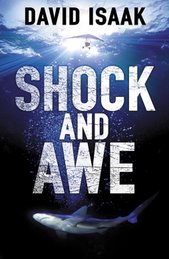
In third person multi, I tend to establish a pattern of POV characters chapter-by-chapter and stick to that pattern until fairly late in the book (where I let it collapse under the story momentum—I let some POVs vanish, let more than one into a single chapter, etc.). In Shock and Awe, if the characters were letters of the alphabet, then the pattern is a simple rotation: A—B—C—D, A—B—C—D…(although after some point I ease in character E and ease out character D).
Tomorrowville takes place in 2088. The protagonist, Toby (sorry, Alis—but I wrote it back in 2002) is someone from our own time, but the other POV characters are all from the world of 2088. In this case, the chapter rotation pattern was Toby—Toby—Somebody Else 1—Toby—Toby—Somebody Else 2…which is a lot of Toby, punctuated by some radically different viewpoints. (Indeed, some people who’ve read the book remember it as being first-person from Toby’s POV.)
Why am I blathering on about this? Because this rotating narrative structure isn’t working for my current novel.
I think I have three third-person POV voices in my current work-in-progress. But try as I might, A—B—C, A—B—C isn’t working for this one. For starters, the three story lines are not immediately connected, and any time you juxtapose two apparently unrelated chapters, readers start hunting for the connections. This can be a good thing, but spinning round and round through the pattern without any clear intersection can make the reader crazy after a few iterations.
A related issue is that I have big backstories with dramatized scenes. So we start with character A in the present, but at some point we need to drop back for a long chapter into character A’s past. Fine. But jumping in time and also rotating POV characters not only dilutes the impact of each story, but also may be downright confusing. As in the earlier post about musicals, it would be nice if these characters could just stride onto stage and get their backstories and motivations out of the way…but novels don’t work like that, do they?
Which has brought me to a horrible realization. My standard policy of rotating POVs isn’t going to work—at least not on a chapter-by-chapter basis. I need maybe eighty pages, four or five chapters, from character A; and then a similar amount from character B; and then again from character C; all of these, as sort of novellas, before I let the three stories collide.
This is making me very nervous. Each time you pull the reader away from one POV to another, you are asking them to make an effort, but if you keep this up in a predictable pattern, they will adjust. On the other hand, writing a novella's-worth and then yanking them away into another novella may really make them frustrated. I don't know. I've never done it.
Another fear is that I don’t have all my wares on display at first. With rotation, you get to meet all the POV characters early, and see the POV span of the novel. I have three very different POV characters in this one—an American male doctor, a Canadian female biologist, and a Peruvian male revolutionary—and each of the POVs has a rather different voice and emphasis. If I don’t rotate early on, people may think they are reading a book about just one of those characters
This book is making me crazy.
In third person multi, I tend to establish a pattern of POV characters chapter-by-chapter and stick to that pattern until fairly late in the book (where I let it collapse under the story momentum—I let some POVs vanish, let more than one into a single chapter, etc.). In Shock and Awe, if the characters were letters of the alphabet, then the pattern is a simple rotation: A—B—C—D, A—B—C—D…(although after some point I ease in character E and ease out character D).
Tomorrowville takes place in 2088. The protagonist, Toby (sorry, Alis—but I wrote it back in 2002) is someone from our own time, but the other POV characters are all from the world of 2088. In this case, the chapter rotation pattern was Toby—Toby—Somebody Else 1—Toby—Toby—Somebody Else 2…which is a lot of Toby, punctuated by some radically different viewpoints. (Indeed, some people who’ve read the book remember it as being first-person from Toby’s POV.)
Why am I blathering on about this? Because this rotating narrative structure isn’t working for my current novel.
I think I have three third-person POV voices in my current work-in-progress. But try as I might, A—B—C, A—B—C isn’t working for this one. For starters, the three story lines are not immediately connected, and any time you juxtapose two apparently unrelated chapters, readers start hunting for the connections. This can be a good thing, but spinning round and round through the pattern without any clear intersection can make the reader crazy after a few iterations.
A related issue is that I have big backstories with dramatized scenes. So we start with character A in the present, but at some point we need to drop back for a long chapter into character A’s past. Fine. But jumping in time and also rotating POV characters not only dilutes the impact of each story, but also may be downright confusing. As in the earlier post about musicals, it would be nice if these characters could just stride onto stage and get their backstories and motivations out of the way…but novels don’t work like that, do they?
Which has brought me to a horrible realization. My standard policy of rotating POVs isn’t going to work—at least not on a chapter-by-chapter basis. I need maybe eighty pages, four or five chapters, from character A; and then a similar amount from character B; and then again from character C; all of these, as sort of novellas, before I let the three stories collide.
This is making me very nervous. Each time you pull the reader away from one POV to another, you are asking them to make an effort, but if you keep this up in a predictable pattern, they will adjust. On the other hand, writing a novella's-worth and then yanking them away into another novella may really make them frustrated. I don't know. I've never done it.
Another fear is that I don’t have all my wares on display at first. With rotation, you get to meet all the POV characters early, and see the POV span of the novel. I have three very different POV characters in this one—an American male doctor, a Canadian female biologist, and a Peruvian male revolutionary—and each of the POVs has a rather different voice and emphasis. If I don’t rotate early on, people may think they are reading a book about just one of those characters
This book is making me crazy.
Nothing About Writing
 We just arrived back--days early, for various reasons--from a short vacation. At the moment, I'm a little dazed, but I promise a post about something substantive tomorrow.
Meanwhile, take a look at these fine pictures of the annual Fire Arts Festival put on by The Crucible in Oakland, California. Some friends dragged us along (we'd already seen The Crucible's astonishing production of Stravinsky's Firebird earlier this year), and the Festival was a truly mind-altering experience.

All of us like to play with fire, right? Chimps and parrots can use language, any number of animals use tools, but fire...now there's a primal, uniquely human trip.
The Fire Arts Festival covers acres with flaming art pieces, gargantuan Tesla coils, and live performances. The whole affair is right at the edge of danger: a gazillion volts of crackling blue arm-thick lightning shooting from a car-sized discharge coil to a man in a tin-woodsman outfit, a thirty-foot-high flame tornado twisting up into the night sky, or a gout of flame rushing up through a 300-pound block of ice--everything about it feels uneasily out of control yet pulls you closer.
Toward the climax of the evening, some fire artists dragged in an upright jet turbine, and started it whining...whining...whining, the pitch rising until people clamped their hands over their ears, and at last a spout of flame shot skywards and everyone backed away. And then backed away even further, and then sort of stumbled into retreat before the raw intensity of the heat. Even fifty feet away, it was barely tolerable. I've been at an active volcanic eruption where it poured into the sea; this is the only heat I've ever felt that compared to living lava.
 Some people, of course, are too mature to amuse themselves by watching people play with matches. For those folks, the amazingly sexy, in-your-face dance troupe The Nekyia are always on hand, en masse or in twos and threes...
Did we have a good time?
Does the Pope wear a hat that looks like the space shuttle?
Subscribe to:
Posts (Atom)