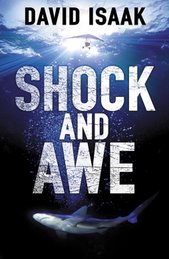
My sister comments on my blog every so often, but is for some reason reluctant to get into the actual Comment trail. I'm not sure why--deniability, perhaps--but I thought I'd share the e-mail she dropped me about my previous posts on writing for hire:
David,
Had to comment on your blog (cuz that's what it is there for!). I think writing for a soap opera would be wicked fun. If anyone offers you said gig and you don't want it, send them my way. I would love to spew out five hours a week involving sweatless sex, artificial lust, attractive drug addiction, furfree beastiality, and alien baby abductions - all with limited special effects and tons of lip gloss. It would be just like the high school only lunch would be catered.
Showing posts with label blah blah blah. Show all posts
Showing posts with label blah blah blah. Show all posts
Saturday, August 23, 2008


Wednesday, July 23, 2008
Important info about "Commas"
A while back, I quoted Bill Brohaugh's famous observation that the only rule in writing is never begin a sentence with a comma.
To my great surprise and pleasure, Bill Brohaugh himself recently dropped through the Comment Trail on that post. I thought you folks might be interested in his comments, so I've promoted them to the body of this post:
David: Your advice is dead on, and all writers should pay heed. Creative rule-breaking can make for some dazzling writing. And writers should heed Raymond Obstfeld's advice, too. Raymond wrote a few articles for me when I edited Writer's Digest years ago.
I don't think you have to pay heed to my bit of advice quoted at the beginning of your post, though. I discovered while writing Everything You Know About English Is Wrong that beginning sentences with commas is not only acceptable, it is common. For those of you interested in an example, this very sentence begins with a comma--and that comma is the phrase "For those of you interested in an example." The first use of the word comma in English was a borrowing from Latin and Greek. A comma was a short phrase, not quite a sentence. (In fact, the OED gives as the definition of Greek comma “a piece cut off,” which might make a good model for people looking to tighten their prose.) The word comma in this definition, tracing back to ancient literature and in use in English by the 1500s, was subsequently transferred to the punctuation symbol that set off the short phrase, the piece cut off.
This language never ceases to surprise and fascinate me.
Now that falls into the category of truly arcane.
I'm off to find a copy of Everything You Know About English Is Wrong. It had a pub date of early May, 2008, so I'm betting it's on the shelves locally. If it isn't, Amazon US has it. And, for those Across the Water, Amazon UK has it as well.
And, thanks for dropping through, Bill--it's an honor to meet you.
To my great surprise and pleasure, Bill Brohaugh himself recently dropped through the Comment Trail on that post. I thought you folks might be interested in his comments, so I've promoted them to the body of this post:
David: Your advice is dead on, and all writers should pay heed. Creative rule-breaking can make for some dazzling writing. And writers should heed Raymond Obstfeld's advice, too. Raymond wrote a few articles for me when I edited Writer's Digest years ago.
I don't think you have to pay heed to my bit of advice quoted at the beginning of your post, though. I discovered while writing Everything You Know About English Is Wrong that beginning sentences with commas is not only acceptable, it is common. For those of you interested in an example, this very sentence begins with a comma--and that comma is the phrase "For those of you interested in an example." The first use of the word comma in English was a borrowing from Latin and Greek. A comma was a short phrase, not quite a sentence. (In fact, the OED gives as the definition of Greek comma “a piece cut off,” which might make a good model for people looking to tighten their prose.) The word comma in this definition, tracing back to ancient literature and in use in English by the 1500s, was subsequently transferred to the punctuation symbol that set off the short phrase, the piece cut off.
This language never ceases to surprise and fascinate me.
Now that falls into the category of truly arcane.
I'm off to find a copy of Everything You Know About English Is Wrong. It had a pub date of early May, 2008, so I'm betting it's on the shelves locally. If it isn't, Amazon US has it. And, for those Across the Water, Amazon UK has it as well.
And, thanks for dropping through, Bill--it's an honor to meet you.
Monday, June 30, 2008
A Distinct Possibility
Seen on a car in downtown Huntington Beach:
FRODO FAILED
Bush has The Ring
a
I have to admit this would explain a lot. Occam's Razor and all that...a
Saturday, June 28, 2008
Two Days of Peace, Love, and Neil Innes
Or, anyhow, two days of Neil Innes. You can keep the Peace and Love.
 The occasion was the Annual Mods & Rockers Film Festival at the American Cinematheque's Egyptian Theatre. American Cinematheque is a nonprofit film society that operates two major theatres in the LA area (one in Hollywood, the other in Santa Monica).
Grauman's Chinese Theatre is world-famous--it's the one with all the celebrity handprints (and sometimes other body-part-prints) in the cement out front. Grauman's Egyptian Theatre, only two blocks down Hollywood Blvd, is more striking than the Chinese Theatre, but it had fallen into such disrepair that in the mid-90s the city sold it to American Cinematheque for $1 on the understanding they would restore it to its original Art Deco glory and reopen it for public screenings. American Cinematheque put $15 million into the renovation, and the result is a gorgeous hybrid of Old Hollywood and modern tech.
For those benighted souls amongst you who don't know of Mr. Innes, I offer this brief resume. He was one of the founding (and continuing) members of the magnificent Bonzo Dog Dada Band (later known as the Bonzo Dog Doo-Dah Band, the Bonzo Dog Band, or simply The Bonzos). If you aren't familiar with the Bonzo Dog Band you are culturally deprived, but I won't try to describe the band--you'll have to check for yourself. (The albums Gorilla, Tadpoles, and Let's Make Up and Be Friendly are highly recommended as introductions.) because there is no one else like them. Some explain the Bonzos by describing them as the British equivalent to Frank Zappa and the Mothers of Invention, but the only commonality is that both were utterly original.
Innes and the late, magnificently peculiar Vivian Stanshall were the most prolific songwriters of the Bonzos. Among the fine songs they penned was the faux-Elvis number "Death Cab for Cutie," which since has been adopted as the name of one of America's best recent bands.
 Neil Innes then went on to write or cowrite much of the music for Monthy Python, including "Brave Sir Robin" in Monty Python and the Holy Grail. (Innes plays Robin's minstrel--and also the forehead-whacking chanting lead monk, as well as the followers who are crushed by a cow and, later, by a Trojan Rabbit catapulted from the castle by French soldiers.) Innes wrote for the Pythons in their last season, and also toured with them and provided musical interludes (including his well-known song "How Sweet to be an Idiot").
After the Python heyday, Innes and Eric Idle formed The Rutles. Innes wrote more than a dozen brilliant Beatlesque songs and starred in the movies The Rutles: All You Need is Cash and The Rutles II: Can't Buy Me Lunch.
Since then, Innes has been involved in dozens of projects and a series of solo albums, and has toured both in Europe and the US. But although everyone in the music business knows him, his public profile has never been high--partly because he loathes the celebrity racket.
Innes and his strange relationship to fame and obscurity is the topic of the new film The Seventh Python, and we attended the premiere at the spectacular Egyptian . The film was followed by a Q&A session with director Burt Kearns, writer-producer Brett Hudson, and a somewhat diffident and embarassed Neil Innes.
This is turn was followed by the world premiere of Neil Innes' short 1963 art-school thesis film (untitled, but starring Viv Stanshall, "Legs" Larry Smith, Roger Ruskin-Spear, and Yvonne Innes), and the evening was rounded out by the world premiere of the Bonzo Dog Doo-Dah Band 40th Anniversary Concert film. Three world premieres in one night--a long, five-hour evening.
But even that wasn't the end. Neil came back the next evening to play a benefit concert for the theatre. We'd seen him on his last tour, but the low-key concert at the Egyptian was even better than his tour show--probably because of the friends-and-family feel of the whole affair.
So my brain is Innes-saturated this morning. Not a bad way to be...but I wish I could stop humming the Rutles song "Cheese and Onions" for a few moments.
 The occasion was the Annual Mods & Rockers Film Festival at the American Cinematheque's Egyptian Theatre. American Cinematheque is a nonprofit film society that operates two major theatres in the LA area (one in Hollywood, the other in Santa Monica).
Grauman's Chinese Theatre is world-famous--it's the one with all the celebrity handprints (and sometimes other body-part-prints) in the cement out front. Grauman's Egyptian Theatre, only two blocks down Hollywood Blvd, is more striking than the Chinese Theatre, but it had fallen into such disrepair that in the mid-90s the city sold it to American Cinematheque for $1 on the understanding they would restore it to its original Art Deco glory and reopen it for public screenings. American Cinematheque put $15 million into the renovation, and the result is a gorgeous hybrid of Old Hollywood and modern tech.
For those benighted souls amongst you who don't know of Mr. Innes, I offer this brief resume. He was one of the founding (and continuing) members of the magnificent Bonzo Dog Dada Band (later known as the Bonzo Dog Doo-Dah Band, the Bonzo Dog Band, or simply The Bonzos). If you aren't familiar with the Bonzo Dog Band you are culturally deprived, but I won't try to describe the band--you'll have to check for yourself. (The albums Gorilla, Tadpoles, and Let's Make Up and Be Friendly are highly recommended as introductions.) because there is no one else like them. Some explain the Bonzos by describing them as the British equivalent to Frank Zappa and the Mothers of Invention, but the only commonality is that both were utterly original.
Innes and the late, magnificently peculiar Vivian Stanshall were the most prolific songwriters of the Bonzos. Among the fine songs they penned was the faux-Elvis number "Death Cab for Cutie," which since has been adopted as the name of one of America's best recent bands.
 Neil Innes then went on to write or cowrite much of the music for Monthy Python, including "Brave Sir Robin" in Monty Python and the Holy Grail. (Innes plays Robin's minstrel--and also the forehead-whacking chanting lead monk, as well as the followers who are crushed by a cow and, later, by a Trojan Rabbit catapulted from the castle by French soldiers.) Innes wrote for the Pythons in their last season, and also toured with them and provided musical interludes (including his well-known song "How Sweet to be an Idiot").
After the Python heyday, Innes and Eric Idle formed The Rutles. Innes wrote more than a dozen brilliant Beatlesque songs and starred in the movies The Rutles: All You Need is Cash and The Rutles II: Can't Buy Me Lunch.
Since then, Innes has been involved in dozens of projects and a series of solo albums, and has toured both in Europe and the US. But although everyone in the music business knows him, his public profile has never been high--partly because he loathes the celebrity racket.
Innes and his strange relationship to fame and obscurity is the topic of the new film The Seventh Python, and we attended the premiere at the spectacular Egyptian . The film was followed by a Q&A session with director Burt Kearns, writer-producer Brett Hudson, and a somewhat diffident and embarassed Neil Innes.
This is turn was followed by the world premiere of Neil Innes' short 1963 art-school thesis film (untitled, but starring Viv Stanshall, "Legs" Larry Smith, Roger Ruskin-Spear, and Yvonne Innes), and the evening was rounded out by the world premiere of the Bonzo Dog Doo-Dah Band 40th Anniversary Concert film. Three world premieres in one night--a long, five-hour evening.
But even that wasn't the end. Neil came back the next evening to play a benefit concert for the theatre. We'd seen him on his last tour, but the low-key concert at the Egyptian was even better than his tour show--probably because of the friends-and-family feel of the whole affair.
So my brain is Innes-saturated this morning. Not a bad way to be...but I wish I could stop humming the Rutles song "Cheese and Onions" for a few moments.
Thursday, June 19, 2008
Bad Movies versus Bad Books

I really enjoy a painfully bad movie--you know, Ed-Wood goodies like Plan 9 From Outer Space, or baffling, incompetent curiosities such as Robot Monster (see picture to left). If you can manage a ludicrous script, clumsy acting, poor directing, and bad production values simultaneously, I'm all yours.
One of my friends, who can't understand how I can bear to watch these disasters, said, "I just don't get it. What's the point in watching bad movies? You don't enjoy reading bad books!"
That's not entirely true. As I made clear in an earlier post, I am a big fan of Atlanta Nights, the worst book ever written. But, then, Atlanta Nights was composed by a team of professional writers with the stated intent of writing a horrifically bad novel. (They succeeded. You could teach novel writing by having pupils study Atlanta Nights and figure out what's wrong with it. It's brilliant.)
The famed novella The Eye of Argon is in that class as well, but I've always thought the attention devoted to it was rather mean-spirited. Yes, the little I've read of it was awful--but it was written by a 16-year-old. Hounding him about it forever seems wrong. I wrote a few things in my adolescence (that is, a couple of years ago), and I wouldn't want them following me around for decades. Or at all.
There are upper limits on the incompetence in a book. If the language skills are below a certain level, you can't make enough sense out of it to tell it is a bad story. Fiction is a participatory medium, and in the face of the incomprehensible the reader just stops.
But film--ah, film is a passive medium, and you can sit back and let it roll by. Unless someone had their hand over the lens of the camera, there are images. one after another. It may not make sense; it may even be painful. But on and on it flows. While a bad book is usually unreadable, a bad movie can be compulsively watchable. And you can experience it with friends!
The wonderful thing is that movies are costly and collaborative. Even a cheap bad movie requires significant sums of money and the commitment of dozens of people. All this energy raises a truly bad movie from merely inept and uninteresting to a full-on fiasco, the artistic equivalent of the destruction of Pompeii. How can you look away from that?
Any fool can write a bad book. But to create a bad movie...well, as Hillary says, It Takes a Village.
One of my friends, who can't understand how I can bear to watch these disasters, said, "I just don't get it. What's the point in watching bad movies? You don't enjoy reading bad books!"
That's not entirely true. As I made clear in an earlier post, I am a big fan of Atlanta Nights, the worst book ever written. But, then, Atlanta Nights was composed by a team of professional writers with the stated intent of writing a horrifically bad novel. (They succeeded. You could teach novel writing by having pupils study Atlanta Nights and figure out what's wrong with it. It's brilliant.)
The famed novella The Eye of Argon is in that class as well, but I've always thought the attention devoted to it was rather mean-spirited. Yes, the little I've read of it was awful--but it was written by a 16-year-old. Hounding him about it forever seems wrong. I wrote a few things in my adolescence (that is, a couple of years ago), and I wouldn't want them following me around for decades. Or at all.
There are upper limits on the incompetence in a book. If the language skills are below a certain level, you can't make enough sense out of it to tell it is a bad story. Fiction is a participatory medium, and in the face of the incomprehensible the reader just stops.
But film--ah, film is a passive medium, and you can sit back and let it roll by. Unless someone had their hand over the lens of the camera, there are images. one after another. It may not make sense; it may even be painful. But on and on it flows. While a bad book is usually unreadable, a bad movie can be compulsively watchable. And you can experience it with friends!
The wonderful thing is that movies are costly and collaborative. Even a cheap bad movie requires significant sums of money and the commitment of dozens of people. All this energy raises a truly bad movie from merely inept and uninteresting to a full-on fiasco, the artistic equivalent of the destruction of Pompeii. How can you look away from that?
Any fool can write a bad book. But to create a bad movie...well, as Hillary says, It Takes a Village.
Tuesday, June 3, 2008
Crude Oil and Gasoline
Much as I hate to let my day job intrude into the real world of writing, I see so much confusion about oil and gasoline these days that I have to say a few words about how oil is turned into the oil products people actually buy and use. Most of you will want to stop reading right here.
You've been warned.
Crude oil is generally referred to as “sweet” or “sour.” This relates to the sulfur content of the crude (the stuff that would give you acid rain if you burned it). Some crudes, such as Malaysia’s Tapis, have as little as 0.03% sulfur by weight, while others, like Venezuela’s notorious Boscan, have as much as 5.5% sulfur by weight (which means about 19 pounds of sulfur in every barrel of oil!)
Sulfur is bad stuff, so most countries have restrictions on how much of it is allowed in products. But most of the world’s supplies of oil are sour; sweetish crudes are concentrated in only a few locations (West Africa, North Africa, East/SE Asia, and the North Sea). All things held equal, sweeter crudes are nicer to work with--but sulfur standards in the US and Europe on gasoline and diesel are now so stringent that everything blended into gasoline or diesel needs to be desulfurized first no matter how sweet the crude is.
Crude oil is a mixture of hydrocarbons of various lengths. The more large molecules, the “heavier” the crude; the more short molecules, the “lighter” the crude.
Smaller molecules boil at lower temperatures. The first thing that happens in a refinery is the crude is heated to about 650 F and then run into a distillation tower that splits it into boiling ranges. A typical crude oil yields something like this
LPG (less than 100 F): 2%
Light Naphtha (100-200 F): 8%
Heavy Naphtha (200-350 F: 10%
SR Kerosene (350-450 F): 10%
SR Diesel (450-650 F): 20%
Heavy Fuel Oil (650 F+): 50%
The SR Kerosene is desulfurized and turned into jet fuel. The SR Diesel is desulfurized and turned into various grades of diesel fuel.
Where’s the gasoline? Nowhere. In modern refineries, the Light Naphtha is run to a desulfurizer, and then becomes a gasoline blendstock. So the direct yield of gasoline from a typical crude, assuming you have a naphtha desulfurizer, is about 8%--but even then, the octane of most Light Naphtha isn't high enough to be gasoline by itself.
But the Heavy Naphtha can be desulfurized and then put in a unit called a catalytic reformer. This unit rearranges the molecular structure of the naphtha and raises the octane, but it also destroys some of the naphtha, so if you put in 10 barrels, you may only get 9 barrels of “reformate” out.
The reformate plus the desulfurized Light Naphtha gives us perhaps 17% yield of gasoline from a typical crude. Since the US demands 52% of every barrel as gasoline, this obviously poses a problem.
Furthermore, the US uses almost no Heavy Fuel Oil—the stuff burned in oil-fired power plants or giant ship engines. Heavy Fuel Oil is only 5% of the US oil demand, but about 50% of the yield from a typical crude, so there is a huge surplus of this produced from a typical barrel.
A lot of people get riled up by the fact that gasoline and diesel cost so much more than crude oil. Well, Heavy Fuel Oil (also known as Residual Fuel Oil, Resid, Bottoms, Bunker Fuel, Bunker, C, and a host of other names) sells for less than the crude it is made from (because the stuff isn’t good for much; it’s main competition is coal).
If half of the output sells for less than the price of the crude, then guess what? The other half will sell for more than the price of the crude, even before factoring in the cost of the refinery.
The answer to the imbalance between supply and demand of Heavy Fuel Oil is “cracking,” the generic name for any number of technologies that split large molecules into smaller fragments, turning Heavy Fuel Oil into material that boils in the naphtha, kerosene, and diesel ranges.
In the US, we have about 17 million barrels per day of distillation capacity, but there is nearly 10 million barrels per day of cracking capacity sitting behind that, waiting to bust up the Heavy Fuel Oil into material to make lighter products.
Neat, huh? The only problem is that cracking technologies are complex and hugely expensive. A single large cracking unit and its auxiliary processes costs hundreds of millions of dollars—sometimes as much as a billion dollars. In addition, the sulfur and other contaminants are concentrated in the heavier materials. So converting Heavy Fuel Oil into lighter products is expensive—and uses a lot of the energy contained in the oil. And, guess how that capital cost and energy loss is paid for? Yep. Higher costs for gasoline, diesel, and jet fuel.
In sophisticated refining centers like California and Texas, the heaviest, sourest crudes in the world can be converted to ultraclean gasoline, jet fuel, and diesel. Despite what some pundits say, there aren’t any crudes that are inherently unsuitable to make into gasoline, except in those countries—mostly in the Third World—where refinery capacity is still based on simple distillation alone and desulfurization hasn’t been added. The lmitation isn't the crude, it's the refining capacity.
Refiners tend to prefer lighter, sweeter crudes, and pay more for them. There was a time decades ago when many refiners in Europe and the US could only run sweet crudes, which was why Colonel Qaddafi was so important in the 1970s (Libyan crude is very sweet). But now most refineries have been upgraded with cracking and desulfurization. Refiners in Houston and Los Angeles run a vast volume of heavy, sour crudes every day, some of it so heavy it's almost asphalt—and turn most of it into gasoline and diesel.
Recently there have been weird comments swirling around the web that even if Saudi Arabia increased its crude exports it wouldn't help the situation in the US because Saudi Arabia produces "the wrong kind of crude to make gasoline." Given that the US imports about 1.5 million barrels per day of crude oil from Saudi Arabia, this obviously can't be true--no US refiner is going to import crude that can't produce gasoline. But if you simply look at the profile of US crude imports, you will find that the average of our crude imports are both heavier and more sour than Saudi Arabia's crude oil exports. Saudi Light Crude would be a big step up compared to the junk we import from Mexico and Venezuela.
For a modern refinery, there is no "wrong kind of crude to produce gasoline."
I'd say more, but then I'd have to start charging my daily rate.
You've been warned.
Crude oil is generally referred to as “sweet” or “sour.” This relates to the sulfur content of the crude (the stuff that would give you acid rain if you burned it). Some crudes, such as Malaysia’s Tapis, have as little as 0.03% sulfur by weight, while others, like Venezuela’s notorious Boscan, have as much as 5.5% sulfur by weight (which means about 19 pounds of sulfur in every barrel of oil!)
Sulfur is bad stuff, so most countries have restrictions on how much of it is allowed in products. But most of the world’s supplies of oil are sour; sweetish crudes are concentrated in only a few locations (West Africa, North Africa, East/SE Asia, and the North Sea). All things held equal, sweeter crudes are nicer to work with--but sulfur standards in the US and Europe on gasoline and diesel are now so stringent that everything blended into gasoline or diesel needs to be desulfurized first no matter how sweet the crude is.
Crude oil is a mixture of hydrocarbons of various lengths. The more large molecules, the “heavier” the crude; the more short molecules, the “lighter” the crude.
Smaller molecules boil at lower temperatures. The first thing that happens in a refinery is the crude is heated to about 650 F and then run into a distillation tower that splits it into boiling ranges. A typical crude oil yields something like this
LPG (less than 100 F): 2%
Light Naphtha (100-200 F): 8%
Heavy Naphtha (200-350 F: 10%
SR Kerosene (350-450 F): 10%
SR Diesel (450-650 F): 20%
Heavy Fuel Oil (650 F+): 50%
The SR Kerosene is desulfurized and turned into jet fuel. The SR Diesel is desulfurized and turned into various grades of diesel fuel.
Where’s the gasoline? Nowhere. In modern refineries, the Light Naphtha is run to a desulfurizer, and then becomes a gasoline blendstock. So the direct yield of gasoline from a typical crude, assuming you have a naphtha desulfurizer, is about 8%--but even then, the octane of most Light Naphtha isn't high enough to be gasoline by itself.
But the Heavy Naphtha can be desulfurized and then put in a unit called a catalytic reformer. This unit rearranges the molecular structure of the naphtha and raises the octane, but it also destroys some of the naphtha, so if you put in 10 barrels, you may only get 9 barrels of “reformate” out.
The reformate plus the desulfurized Light Naphtha gives us perhaps 17% yield of gasoline from a typical crude. Since the US demands 52% of every barrel as gasoline, this obviously poses a problem.
Furthermore, the US uses almost no Heavy Fuel Oil—the stuff burned in oil-fired power plants or giant ship engines. Heavy Fuel Oil is only 5% of the US oil demand, but about 50% of the yield from a typical crude, so there is a huge surplus of this produced from a typical barrel.
A lot of people get riled up by the fact that gasoline and diesel cost so much more than crude oil. Well, Heavy Fuel Oil (also known as Residual Fuel Oil, Resid, Bottoms, Bunker Fuel, Bunker, C, and a host of other names) sells for less than the crude it is made from (because the stuff isn’t good for much; it’s main competition is coal).
If half of the output sells for less than the price of the crude, then guess what? The other half will sell for more than the price of the crude, even before factoring in the cost of the refinery.
The answer to the imbalance between supply and demand of Heavy Fuel Oil is “cracking,” the generic name for any number of technologies that split large molecules into smaller fragments, turning Heavy Fuel Oil into material that boils in the naphtha, kerosene, and diesel ranges.
In the US, we have about 17 million barrels per day of distillation capacity, but there is nearly 10 million barrels per day of cracking capacity sitting behind that, waiting to bust up the Heavy Fuel Oil into material to make lighter products.
Neat, huh? The only problem is that cracking technologies are complex and hugely expensive. A single large cracking unit and its auxiliary processes costs hundreds of millions of dollars—sometimes as much as a billion dollars. In addition, the sulfur and other contaminants are concentrated in the heavier materials. So converting Heavy Fuel Oil into lighter products is expensive—and uses a lot of the energy contained in the oil. And, guess how that capital cost and energy loss is paid for? Yep. Higher costs for gasoline, diesel, and jet fuel.
In sophisticated refining centers like California and Texas, the heaviest, sourest crudes in the world can be converted to ultraclean gasoline, jet fuel, and diesel. Despite what some pundits say, there aren’t any crudes that are inherently unsuitable to make into gasoline, except in those countries—mostly in the Third World—where refinery capacity is still based on simple distillation alone and desulfurization hasn’t been added. The lmitation isn't the crude, it's the refining capacity.
Refiners tend to prefer lighter, sweeter crudes, and pay more for them. There was a time decades ago when many refiners in Europe and the US could only run sweet crudes, which was why Colonel Qaddafi was so important in the 1970s (Libyan crude is very sweet). But now most refineries have been upgraded with cracking and desulfurization. Refiners in Houston and Los Angeles run a vast volume of heavy, sour crudes every day, some of it so heavy it's almost asphalt—and turn most of it into gasoline and diesel.
Recently there have been weird comments swirling around the web that even if Saudi Arabia increased its crude exports it wouldn't help the situation in the US because Saudi Arabia produces "the wrong kind of crude to make gasoline." Given that the US imports about 1.5 million barrels per day of crude oil from Saudi Arabia, this obviously can't be true--no US refiner is going to import crude that can't produce gasoline. But if you simply look at the profile of US crude imports, you will find that the average of our crude imports are both heavier and more sour than Saudi Arabia's crude oil exports. Saudi Light Crude would be a big step up compared to the junk we import from Mexico and Venezuela.
For a modern refinery, there is no "wrong kind of crude to produce gasoline."
I'd say more, but then I'd have to start charging my daily rate.
Sunday, May 4, 2008
Teaching Bad Lessons
 Child psychologists agree that you shouldn't reward whining, as it only reinforces the behavior.
Well, a while back on this blog I whined about the way Amazon US had managed to screw up the listing for the US paperback release of RN Morris' Gentle Axe, making it almost impossible to find and order that edition of the book. (I whine about Amazon US a lot, largely because they did terrible things to people in the US who ordered Shock and Awe.)
To my lasting amazement Caroline Garner, the publicist at Penguin US, actually read the blog entry and promptly made Amazon fix the entries. (Anybody who can slap Amazon into shape is somebody I want on my side.) She also sent me a handful of copies of the book to hand out to my friends and relatives, as well as a bound galley of the US edition of Roger's next book, which I will hawk on eBay for beaucoup bucks when he becomes just a little better known.
This was a bad lesson. You can expect a lot more whining from me in the future.
As long as I'm having my own bad behavior reinforced, let me reinforce Jenn Ashworth's bad behavior over on her blog Every Day I Lie a Little. She Of The One Sock has a nice post listing ten lies she has told in just one day (and claims this is not an exhaustive list). It also discusses the role of lying in her childhood (and makes me wonder what the hell a "wendy house" might be).
And, while we're at it, Neil Ayres tells some Big Fat Lies about Aliya over on their blog. (But when Neil does it, it's called Magical Realism, and is therefore okay.)
So, whining. Lying. Would anyone else like their bad behavior reinforced? Perhaps a tantrum, or maybe a little burglary?
Wednesday, April 30, 2008
What, more tags?
Yes. This one from Charles Lambert. And it has the virtue of being easy:
1. Pick up the nearest book.
2. Open to page 123
3. Find the fifth sentence.
4. Post the next three sentences.
5. Tag five people, and acknowledge who tagged you.
Or at least it is apparently easy. As it happens, I'm rearranging things right now, and have stacks of books to both sides of my keyboard. It's hard to say what's "nearest."
One possibility is Jonathan Carroll's novel Outside the Dog Museum, which gives us:
I saw him almost as soon as I stepped out of the elevator into the lobby. Sitting near the reception desk smoking a cigarette, he looked more like a fifteen-year-old skateboarder from Laguna Beach than the Crown Prince of Saru. In his late twenties, wearing faded jeans, a black Purdue Boilermaker's sweatshirt, and high-top basketball sneakers that were a cartoon of color, flashy arrows, lines, and zigzags.
Another possibility is Tim Weiner's history of the CIA, Legacy of Ashes:
At the end of 1955, President Eisenhower changed the CIA's marching orders. Recognizing that covert action could not undermine the Kremlin, he revised the rules written at the start of the Cold War. The new order, labeled NSC 5412/2 and dates December 28, 1955, remained in effect for fifteen years.
Or it could be Rosenkrantz and Satran's The Last Word on First Names:
This onetime poetic name* of Celtic origin, the name of the angel who governs the month of June, is now showing signs of age, relegated to playing grandma's on TV sitcoms.
MURPHY. One of the boldest, brightest, and breeziest of the Irish surname names, thanks to the character played so convincingly by Candice Bergen on Murphy Brown--and to then-Vice-President Dan Quayle for keeping it in the headlines so long.
(*that entry was for MURIEL, by the way.)
Or it could be Mrs. Byrne's Dictionary of Unusual, Obscure, and Preposterous Words:
malnola n. a vague feeling of mental discomfort
malversation n. corruption in office (politics)
mamamouchi n. 1. A pompous-sounding, though bogus, Turkish title.
Or--oh, that's enough.
If you've read this far and feel like responding, consider yourself tagged.
1. Pick up the nearest book.
2. Open to page 123
3. Find the fifth sentence.
4. Post the next three sentences.
5. Tag five people, and acknowledge who tagged you.
Or at least it is apparently easy. As it happens, I'm rearranging things right now, and have stacks of books to both sides of my keyboard. It's hard to say what's "nearest."
One possibility is Jonathan Carroll's novel Outside the Dog Museum, which gives us:
I saw him almost as soon as I stepped out of the elevator into the lobby. Sitting near the reception desk smoking a cigarette, he looked more like a fifteen-year-old skateboarder from Laguna Beach than the Crown Prince of Saru. In his late twenties, wearing faded jeans, a black Purdue Boilermaker's sweatshirt, and high-top basketball sneakers that were a cartoon of color, flashy arrows, lines, and zigzags.
Another possibility is Tim Weiner's history of the CIA, Legacy of Ashes:
At the end of 1955, President Eisenhower changed the CIA's marching orders. Recognizing that covert action could not undermine the Kremlin, he revised the rules written at the start of the Cold War. The new order, labeled NSC 5412/2 and dates December 28, 1955, remained in effect for fifteen years.
Or it could be Rosenkrantz and Satran's The Last Word on First Names:
This onetime poetic name* of Celtic origin, the name of the angel who governs the month of June, is now showing signs of age, relegated to playing grandma's on TV sitcoms.
MURPHY. One of the boldest, brightest, and breeziest of the Irish surname names, thanks to the character played so convincingly by Candice Bergen on Murphy Brown--and to then-Vice-President Dan Quayle for keeping it in the headlines so long.
(*that entry was for MURIEL, by the way.)
Or it could be Mrs. Byrne's Dictionary of Unusual, Obscure, and Preposterous Words:
malnola n. a vague feeling of mental discomfort
malversation n. corruption in office (politics)
mamamouchi n. 1. A pompous-sounding, though bogus, Turkish title.
Or--oh, that's enough.
If you've read this far and feel like responding, consider yourself tagged.
Monday, April 7, 2008
What’s Your Self-Image Age?
My maternal grandmother was a beautiful woman in her youth, and lucky to be born at the right time for her looks—she was petite, slender, a bit flat-chested, and had a lovely oval face. With a cap of short, dark hair, she was the perfect picture of femininity for the 1920s in the US; the image of a flapper. If she'd smoked, her ideal accessory would have been one of those foot-long cigarette holders.
By the time I knew her she was still beautiful but looked like...well, somebody’s grandmother. And she occasionally told me, “I get up in the morning, go into the bathroom to wash my face, and look up into the mirror and say, ‘Who is that old lady?’ “
She passed this trait on to my aunt. Once, when my aunt was out shopping, a kid came racing by on a skateboard. This kid’s friend yelled, “Watch out, stupid! You almost hit that old lady!” Naturally, my aunt stopped and looked around to find the poor woman who had been so endangered.
When my grandmother looked in the mirror, was she surprised that she wasn’t twenty? Or thirty? What age did she think she was supposed to be?
I’ve been wondering about this lately, because I think the issue runs deeper than mere looks. In fact, I’ve begun to think our self-image coalesces around some particular age, and then never really progresses much; there’s some ‘age’ in the back of our mind that seems to feel right, and most of us, like my grandmother, are surprised to find we are no longer that age.
I know what my Self-Image Age is. It’s seventeen. Old enough to drive, but not old enough to buy cigarettes legally, and certainly not old enough to vote or drink. I’m constantly surprised when policemen call me “Sir” rather than “You little punk.”
This, of course, is how I manage to continue being so immature and irresponsible. I’ve still got my whole life ahead of me, and, in general, I think I’m unusually gifted and precocious…for someone who hasn’t even started college yet.
This also explains why I’m always finding new bands I like. I’m told by the music industry that responsible adults do not listen to any band they didn’t hear before the age of thirty. But it’s okay. I’m seventeen.
I’m acquainted with people whose Self-Image Ages are in their twenties or thirties, and I know a few people who will never really come into their own until they hit their mid-sixties and their Inner Grumpy Old Men are allowed out.
If I were in the field of psychology, I’m sure I could turn this half-baked idea of Self-Image Age into a new therapeutic modality. Why spend all that time trying to heal your Inner Child when what you might really need is to heal your despairing Inner Forty-Four-Year-Old? And why not deal with your Inner Forty-Four-Year-Old while you’re still twenty-five? Or why not get your Self-Image Age to grow the hell up? Why do hypnotic regression when you could do hypnotic progression? The possiblities are endless.
Alas for the field of psychology, I’m too busy writing fiction. And this blog. But the next time you read something of mine and notice the inevitable flaws, remember: it’s pretty good for a teenager.
By the time I knew her she was still beautiful but looked like...well, somebody’s grandmother. And she occasionally told me, “I get up in the morning, go into the bathroom to wash my face, and look up into the mirror and say, ‘Who is that old lady?’ “
She passed this trait on to my aunt. Once, when my aunt was out shopping, a kid came racing by on a skateboard. This kid’s friend yelled, “Watch out, stupid! You almost hit that old lady!” Naturally, my aunt stopped and looked around to find the poor woman who had been so endangered.
When my grandmother looked in the mirror, was she surprised that she wasn’t twenty? Or thirty? What age did she think she was supposed to be?
I’ve been wondering about this lately, because I think the issue runs deeper than mere looks. In fact, I’ve begun to think our self-image coalesces around some particular age, and then never really progresses much; there’s some ‘age’ in the back of our mind that seems to feel right, and most of us, like my grandmother, are surprised to find we are no longer that age.
I know what my Self-Image Age is. It’s seventeen. Old enough to drive, but not old enough to buy cigarettes legally, and certainly not old enough to vote or drink. I’m constantly surprised when policemen call me “Sir” rather than “You little punk.”
This, of course, is how I manage to continue being so immature and irresponsible. I’ve still got my whole life ahead of me, and, in general, I think I’m unusually gifted and precocious…for someone who hasn’t even started college yet.
This also explains why I’m always finding new bands I like. I’m told by the music industry that responsible adults do not listen to any band they didn’t hear before the age of thirty. But it’s okay. I’m seventeen.
I’m acquainted with people whose Self-Image Ages are in their twenties or thirties, and I know a few people who will never really come into their own until they hit their mid-sixties and their Inner Grumpy Old Men are allowed out.
If I were in the field of psychology, I’m sure I could turn this half-baked idea of Self-Image Age into a new therapeutic modality. Why spend all that time trying to heal your Inner Child when what you might really need is to heal your despairing Inner Forty-Four-Year-Old? And why not deal with your Inner Forty-Four-Year-Old while you’re still twenty-five? Or why not get your Self-Image Age to grow the hell up? Why do hypnotic regression when you could do hypnotic progression? The possiblities are endless.
Alas for the field of psychology, I’m too busy writing fiction. And this blog. But the next time you read something of mine and notice the inevitable flaws, remember: it’s pretty good for a teenager.
Monday, March 31, 2008
Fine Oregon Place Names
This is in response to Tim's comments on the previous post.
Yes, there is indeed a town of Wanker's Corner, Oregon. It was never much of a town--actually, just a corner, in fact, with a grocery store and saloon. Of course, I haven't been there since 1993, so things may have changed.
Even before the term "wanker" invaded America, people thought this was a pretty funny name. The proprietors of the store--who were comprised of at least three generations of Wankers--were unamused, and informed everyone it was pronouced "WAHN-kers."
 Over time, of course, the town's name became its main attraction, and the Wanker's Corner Saloon capitalized on it. The saloon had always been a bit odd--the kind of place where peanuts in the shell were free and everyone was encouraged to throw the shells on the sawdust-strewn floor. The owner had a taste for offbeat decor, and stuffed the place with antiques...and not tasteful, grandma's antiques, either--wooden Indians, old advertising signs, oversized chickens. old gasoline pumps.
In addition, he accumulated a lot of odds and ends from Australia. Not to engage in any national stereotyping, but a place that served beer and was in a town called Wanker's Corner was a magnet for Australian tourists, even though Wanker's Corner was a bit off the beaten track.
The peanuts, the name, and the Australian connection provided the joint with its logo: a kangaroo pulling a handful of peanuts from its pouch over the words "Grab your nuts at Wanker's Corner." The grab-your-nuts design is still available on t-shirts, but calmer shirts and hats (and a subtle red thong) are also available. After all, with a name like Wanker's Corner Saloon, do you really need anything but the words?
The town is st ill there, but Wanker's Corner Saloon has moved to larger quarters in the nearby town of Wilsonville. The location may have gone downhill, but all the geegaws and antiques have been relocated to the new site, and it is apparently now quite a popular place--the photo here shows a Maxim Magazine "talent search night" (the 'talent' they are searching for being looking good naked).
Wanker's Corner isn't the only fine place name in Oregon, however. The poor spellers and visually challenged transcribers who settled the state provided us with a host of mistaken place names:
Milwaukie (named after Milwaukee, Wisconsin)
Idea (named for "Ida" someone, but misread)
Olex (same thing, but for "Alex")
Ewe (they meant "Yew")
Depoe Bay (umm, "Depot")
Owyhee River ("Hawaii River," named for some Hawaiian students who drowned there)
And, then, the just plain inscrutable:
Boring, Oregon
Drain, Oregon
Zigzag, Oregon
Ragic, Oregon and Ekoms, Oregon (two small places near one another; that's "Cigar" and "Smoke" spelled backwards, and, no, I don't know why)
and, of course, the rather large town of Beaverton, Oregon. Happily not far from Wanker's Corner.
PS. The estimable Rob from Denver dropped a link on the comment trail to a video where some folks visit the town of Mianus, Connecticut. It's a one-joke sort of video, and a bit juvenile. Therefore, it naturally had us roaring with laughter.
Yes, there is indeed a town of Wanker's Corner, Oregon. It was never much of a town--actually, just a corner, in fact, with a grocery store and saloon. Of course, I haven't been there since 1993, so things may have changed.
Even before the term "wanker" invaded America, people thought this was a pretty funny name. The proprietors of the store--who were comprised of at least three generations of Wankers--were unamused, and informed everyone it was pronouced "WAHN-kers."
 Over time, of course, the town's name became its main attraction, and the Wanker's Corner Saloon capitalized on it. The saloon had always been a bit odd--the kind of place where peanuts in the shell were free and everyone was encouraged to throw the shells on the sawdust-strewn floor. The owner had a taste for offbeat decor, and stuffed the place with antiques...and not tasteful, grandma's antiques, either--wooden Indians, old advertising signs, oversized chickens. old gasoline pumps.
In addition, he accumulated a lot of odds and ends from Australia. Not to engage in any national stereotyping, but a place that served beer and was in a town called Wanker's Corner was a magnet for Australian tourists, even though Wanker's Corner was a bit off the beaten track.
The peanuts, the name, and the Australian connection provided the joint with its logo: a kangaroo pulling a handful of peanuts from its pouch over the words "Grab your nuts at Wanker's Corner." The grab-your-nuts design is still available on t-shirts, but calmer shirts and hats (and a subtle red thong) are also available. After all, with a name like Wanker's Corner Saloon, do you really need anything but the words?
The town is st
 ill there, but Wanker's Corner Saloon has moved to larger quarters in the nearby town of Wilsonville. The location may have gone downhill, but all the geegaws and antiques have been relocated to the new site, and it is apparently now quite a popular place--the photo here shows a Maxim Magazine "talent search night" (the 'talent' they are searching for being looking good naked).
Wanker's Corner isn't the only fine place name in Oregon, however. The poor spellers and visually challenged transcribers who settled the state provided us with a host of mistaken place names:
Milwaukie (named after Milwaukee, Wisconsin)
Idea (named for "Ida" someone, but misread)
Olex (same thing, but for "Alex")
Ewe (they meant "Yew")
Depoe Bay (umm, "Depot")
Owyhee River ("Hawaii River," named for some Hawaiian students who drowned there)
And, then, the just plain inscrutable:
Boring, Oregon
Drain, Oregon
Zigzag, Oregon
Ragic, Oregon and Ekoms, Oregon (two small places near one another; that's "Cigar" and "Smoke" spelled backwards, and, no, I don't know why)
and, of course, the rather large town of Beaverton, Oregon. Happily not far from Wanker's Corner.
PS. The estimable Rob from Denver dropped a link on the comment trail to a video where some folks visit the town of Mianus, Connecticut. It's a one-joke sort of video, and a bit juvenile. Therefore, it naturally had us roaring with laughter.
Sunday, March 9, 2008
No Such Thing as Bad Publicity
Remember James Frey, the guy who wrote the partially faked memoir A Million Little Pieces? (After Frey said the book was 95% true, David Thayer remarked that this still left 950,000 real Little Pieces, which he thought was quite a lot.)
Harper is publishing Frey's new novel this summer, with a claimed 350,000 print run. There was speculation that he had also placed a collection of short stories. According to the New York Times:
Well, okay, we already knew Mr. Frey had some issues with telling the truth.
Faked memoirs seem to be popular; a woman named Margaret Seltzer just went down for one last week. But I suspect fake memoirs will be even more popular now—Mr Frey has demonstrated they seem to be a good route to getting a top agent and a big publishing deal for your novel.
On the other hand, Laura Albert, who wrote two novels under the pen name JT Leroy, was successfully sued for hundreds of thousands of dollars—because the publisher (and production company who optioned his/her books) knew that what she was writing was fiction, but bought the books in the belief that their author was a more interesting person than the author actually was.
Now, let me get this straight:
1) Frey lies in a book claimed to be non-fiction, and is rewarded with a huge fiction contract.
2) Laura Albert sells a novel and gets saddled with a massive debt because she, the author, isn’t as interesting as the person they believed the author to be.
Is it just me, or is that messed up?
DISCLAIMER: For the record, I would just like to assert that neither I, nor any of the fiction-writing visitors to this site, are interesting people in any way whatsoever, nor have we ever represented ourselves as being interesting people. Should anyone ever buy any of our novels, or procure the rights to them, or even happen to glance at them in a bookstore, they should not do so under the mistaken impression that we, ourselves, the writers, are interesting. We are dull as dirt, which is why we sit in rooms by ourselves making up stories about our imaginary friends. You can find more interesting things than us under your sofa cushions. Do not under any circumstances buy our novels, no matter how exciting they may be, under the illusion that we, ourselves, must be even more exciting. We are somewhat less sexually attractive than Yoda (though we have better syntax and some of us, at least most of the women, have less hair growing out of our ears); we are less witty than the defensive line of an American football team; and we are slightly less charming and socially adriot than a herd of flatulent hippos. So, even if our novels happen to be exciting or interesting, you have no grounds for taking legal action against us in the belief that we, ourselves, ought to be more interesting. We aren’t, and we warned you in advance, so there are no grounds to sue any of us. The days of the wild bohemian artist is long gone.
[Note to other novelists: We’re having another get-together here. Drinks, nose-candy, and exotic snacks will be provided free, but if you need any “equipment” you’ll have to bring it yourselves. Although we discard any left-behind needles, please do check the lost and found before leaving—we’ve got four pairs of thigh-high boots, a whole wad of thongs (we laundered them), and any number of rather unique, um, devices, none of which fit us. And, please: be considerate. If you insist on going all Sylvia Plath, please do it elsewhere—our oven is electric, and many of our guests need to get home to relieve the babysitter, and don’t have time for yet another police inquest! ]
Harper is publishing Frey's new novel this summer, with a claimed 350,000 print run. There was speculation that he had also placed a collection of short stories. According to the New York Times:
Reached by telephone before the announcement, Mr. Frey denied rumors that he had sold a short story collection, saying, “I have never written a short story in my life.”
But Mr. Frey published a short story last fall in a catalog for an exhibition by Malerie Marder, a Los Angeles-based artist.
Well, okay, we already knew Mr. Frey had some issues with telling the truth.
Faked memoirs seem to be popular; a woman named Margaret Seltzer just went down for one last week. But I suspect fake memoirs will be even more popular now—Mr Frey has demonstrated they seem to be a good route to getting a top agent and a big publishing deal for your novel.
On the other hand, Laura Albert, who wrote two novels under the pen name JT Leroy, was successfully sued for hundreds of thousands of dollars—because the publisher (and production company who optioned his/her books) knew that what she was writing was fiction, but bought the books in the belief that their author was a more interesting person than the author actually was.
Now, let me get this straight:
1) Frey lies in a book claimed to be non-fiction, and is rewarded with a huge fiction contract.
2) Laura Albert sells a novel and gets saddled with a massive debt because she, the author, isn’t as interesting as the person they believed the author to be.
Is it just me, or is that messed up?
DISCLAIMER: For the record, I would just like to assert that neither I, nor any of the fiction-writing visitors to this site, are interesting people in any way whatsoever, nor have we ever represented ourselves as being interesting people. Should anyone ever buy any of our novels, or procure the rights to them, or even happen to glance at them in a bookstore, they should not do so under the mistaken impression that we, ourselves, the writers, are interesting. We are dull as dirt, which is why we sit in rooms by ourselves making up stories about our imaginary friends. You can find more interesting things than us under your sofa cushions. Do not under any circumstances buy our novels, no matter how exciting they may be, under the illusion that we, ourselves, must be even more exciting. We are somewhat less sexually attractive than Yoda (though we have better syntax and some of us, at least most of the women, have less hair growing out of our ears); we are less witty than the defensive line of an American football team; and we are slightly less charming and socially adriot than a herd of flatulent hippos. So, even if our novels happen to be exciting or interesting, you have no grounds for taking legal action against us in the belief that we, ourselves, ought to be more interesting. We aren’t, and we warned you in advance, so there are no grounds to sue any of us. The days of the wild bohemian artist is long gone.
[Note to other novelists: We’re having another get-together here. Drinks, nose-candy, and exotic snacks will be provided free, but if you need any “equipment” you’ll have to bring it yourselves. Although we discard any left-behind needles, please do check the lost and found before leaving—we’ve got four pairs of thigh-high boots, a whole wad of thongs (we laundered them), and any number of rather unique, um, devices, none of which fit us. And, please: be considerate. If you insist on going all Sylvia Plath, please do it elsewhere—our oven is electric, and many of our guests need to get home to relieve the babysitter, and don’t have time for yet another police inquest! ]
Saturday, February 23, 2008
SEX SEX SEX (Writing) LIVE NUDE GIRLS (and) SEX SEX SEX
Down on Century Boulevard, not far from Los Angeles International Airport, there is a huge marquee which, as long as I can remember (and, no, that's really longer than last week) , has announced that within, for a certain fee, we might behold upon the premises (pause for intake of breath from the audience) LIVE NUDE GIRLS.
My late aunt, Bernie Child, was fond of observing that this ought to be a concept universally appealing, at least if it were contrasted to the opportunity to see DEAD NUDE GIRLS.
But, then, my aunt was a nutjob. Clearly a relative. I miss her deeply.
But that’s a little off-topic. What I hoped to respond to was the whole issue of sex scenes. This has come up (no pun intended, and that little editorial remark suggests why this is a major issue in self-conscious modern writing) in the immediate blogosphere...mentioned by writers ranging from Tim Stretton, to Emma Darwin, to Ms. Susan Hill herself. So it’s a (shit, here we go again with double entendres), umm, hot topic with writers. Even if they fear it. In a time of sexual freedom, many writers have gone frigid (though not necessarily the three aforementioned sex kittens. Or sex toms, if Tim prefers.)
Me, I love sex scenes, simply because they are the ultimate high-wire act. You instantly have everyone’s attention. Okay, ya big jerk--how you gonna to play it? I've always loved having sweaty palms.
The problem is that in sex scenes most writers seem to forget everything they ever learned about writing. They romp off into abstractions, or get overly clinical. Writers who choose words with precision suddenly fall back on cliché. And the rules that even the most reluctant observer of rules will admit have validity—interest, tension, originality—suddenly fly out the window. Hemingway, who, whatever you think of his prose overall, was certainly a breaker of rules, wrote sex scenes that wouldn’t pass muster in a 1950s confessions magazine (“Did the earth move for you, too?” Umm, well, frankly, not so much.)
I’m hardly one to be lecturing. My first published novel. Shock and Awe, only has one real sex scene, and certainly not one of my favorites. It's not a sexy book. I couldn’t have crammed in a second sex scene, even if publication would have depended on it (and, luckily, it didn’t). And the scene I included involved a man having sex with a woman who was probably as strong, physically, as he was, and who was certainly a hell of a lot more centered than he was…all of this giving it a certain homoerotic overtone—and, one hopes, making it interesting to the reader.
But the rest of my books are far more sex-laden. (I like to think it’s because it was appropriate. But maybe it’s just, well…you know, an issue I need to deal with. But, as St. Anthony prayed, Lord, give me chastity…but don’t give it now.) My soon-to-be-published novel Tomorrowville. which was written far before Shock and Awe, has more sex: because it is demanded by the story line, and because it’s (I think) funny, too—futuristic, bio-augmented sex, sometimes accompanied by unexpected impotence, plus sex affected by the medications one of the participants has been prescribed. Part of the story? You betcha. Fun to write? You betcha. Effective? Hey, buy the book next year, ya slackers.
I had a novel, A Map of the Edge, (told from the POV of a 15-year-old boy) which was praised yet rejected by several agents, one of whom commented, “…but just too much sex and drugs…” even though the sex-drenched first three chapters were what led him to request the full manuscript. Well, I don’t think it was sex or drugs that caused the problem. If you didn’t like the sex or drugs, you wouldn’t have requested the manuscript. Oh, sure, I admit the story might have totally run off the rails. Mea effing culpa. But the sex had you holding the pages in one hand. C’mon, admit it… the problem was my general incompetence. Don’t blame the sex.
What’s my point, other than this self-aggrandizing claptrap? Okay, here’s a few points about how I think sex scenes ought to be written. Feel free to tell me I ought to go…well, blow myself.
1) Don’t unintentionally let diction drift. Use whatever terminology the POV character would use. Don’t shift from “his flaccid penis” to “his throbbing manhood” just because we’ve, umm, finally got wet. Unless you’re making a point.
2) Don’t forget the basics. Tension, pacing, avoidance of cliché, and all the rest, still play their roles (unless you’ve earned the cliché, but that applies to all writing. And, incidentally, fuck you very much if you’ve had the brilliance to earn it. An earned cliché is mastery and usually immortality.) In general, don’t suddenly go all romance-novel unless you’re writing, erm, a romance novel.
3) Stay in close POV. This is intimate stuff. Don’t go all cinematic. This is writing, not film, and we shouldn’t necessarily see the whole galaxy. The stain on the pillowcase or the broken shoelace beside the bed is more evocative than the globular cluster in Omega Centauri. Sticky, Icky. Live with it. We’re all kinda leaky. “Did you feel the earth move?” “I dunno. Did you feel the sheets stick to your thighs?”
4) Stay in close POV…except when you shouldn’t. The middle of a sex scene is the most wonderful moment to pull back into either a bird’s-eye view or a cosmic view or an internal monologue (no matter how that conflicts with my previous point.) It’s a perfect time to surprise the reader, or hold the moment in suspense, or introduce a new thread, while the reader wonders what the hell you’re doing when the important action is somewhere, umm, south of what you’re yammering on about. It’s a glorious opportunity.
5) Embrace awkwardness. Except for perhaps the fiftieth fuck between exclusive partners, sex, no matter how exciting, is awkward. (Too big, too small, too fast, too slow, too smelly, too dry, too purple, too Manichean, too whatever.) And even after #50, invariably a bit messy. And the earth doesn’t move, except by coincidence, incompetence, or divine intervention, any of which need to be detailed in the prose. A stand-up comic (by some accounts Gary Shandling, by others Richard Lewis) asserted that a realistic sex manual would be entitled Ouch, You’re On My Hair! Embrace awkwardness—any reader is bound to identify. Women usually understand this point instantly, though they aren’t always willing to write it honestly. Men usually understand this point instantly…and are almost never willing to write it at all, honestly or otherwise. In some matters, guys are just, well…pussies.
6) “No tears in the writer, no tears in the reader.” Or so Robert Frost asserted. If you aren’t—ahem, (send the kiddies into the next room for a minute)—hard or wet or both (as befits you), or at least amused or shocked (as befits your story) when you’ve written a sex scene and re-read it….well, question it. And consider the next point.
7) "The best work that anybody ever writes is the work that is on the verge of embarrassing him, always.” Arthur Miller, one of history’s finest playwrights, mentioned that in an interview. All I can do is doff my hat, with the exception of expanding the masculine to include the feminine. I think this is the most important point in this somewhat silly post. If the writer isn’t in such an intimate, exposed place in working with the scene that it touches some edges, then the scene probably needs to be cut.
One odd detail I've gleaned from having many folks (roughly 60:40 female:male) read my stuff over the course of 5 1/2 novels is that graphic sex really doesn't bother most women. They're sturdy. It's inauthentic sex that tends to make them want to strangle the writer.
On the other hand, portrayal of authentic, messy, unidealized sex makes many of the boys intensely uncomfortable.
It's one of those role-reversal things, and maybe one of you readers can explain it. But my uneducated theory is, if we ain't uncomfortable, we ain't really writing. And if it ain't a little uncomfortable and awkward, heck, it ain't sex, either.
But that might just be my throbbing manhood speaking. Or perhaps some nearby orifice.
My late aunt, Bernie Child, was fond of observing that this ought to be a concept universally appealing, at least if it were contrasted to the opportunity to see DEAD NUDE GIRLS.
But, then, my aunt was a nutjob. Clearly a relative. I miss her deeply.
But that’s a little off-topic. What I hoped to respond to was the whole issue of sex scenes. This has come up (no pun intended, and that little editorial remark suggests why this is a major issue in self-conscious modern writing) in the immediate blogosphere...mentioned by writers ranging from Tim Stretton, to Emma Darwin, to Ms. Susan Hill herself. So it’s a (shit, here we go again with double entendres), umm, hot topic with writers. Even if they fear it. In a time of sexual freedom, many writers have gone frigid (though not necessarily the three aforementioned sex kittens. Or sex toms, if Tim prefers.)
Me, I love sex scenes, simply because they are the ultimate high-wire act. You instantly have everyone’s attention. Okay, ya big jerk--how you gonna to play it? I've always loved having sweaty palms.
The problem is that in sex scenes most writers seem to forget everything they ever learned about writing. They romp off into abstractions, or get overly clinical. Writers who choose words with precision suddenly fall back on cliché. And the rules that even the most reluctant observer of rules will admit have validity—interest, tension, originality—suddenly fly out the window. Hemingway, who, whatever you think of his prose overall, was certainly a breaker of rules, wrote sex scenes that wouldn’t pass muster in a 1950s confessions magazine (“Did the earth move for you, too?” Umm, well, frankly, not so much.)
I’m hardly one to be lecturing. My first published novel. Shock and Awe, only has one real sex scene, and certainly not one of my favorites. It's not a sexy book. I couldn’t have crammed in a second sex scene, even if publication would have depended on it (and, luckily, it didn’t). And the scene I included involved a man having sex with a woman who was probably as strong, physically, as he was, and who was certainly a hell of a lot more centered than he was…all of this giving it a certain homoerotic overtone—and, one hopes, making it interesting to the reader.
But the rest of my books are far more sex-laden. (I like to think it’s because it was appropriate. But maybe it’s just, well…you know, an issue I need to deal with. But, as St. Anthony prayed, Lord, give me chastity…but don’t give it now.) My soon-to-be-published novel Tomorrowville. which was written far before Shock and Awe, has more sex: because it is demanded by the story line, and because it’s (I think) funny, too—futuristic, bio-augmented sex, sometimes accompanied by unexpected impotence, plus sex affected by the medications one of the participants has been prescribed. Part of the story? You betcha. Fun to write? You betcha. Effective? Hey, buy the book next year, ya slackers.
I had a novel, A Map of the Edge, (told from the POV of a 15-year-old boy) which was praised yet rejected by several agents, one of whom commented, “…but just too much sex and drugs…” even though the sex-drenched first three chapters were what led him to request the full manuscript. Well, I don’t think it was sex or drugs that caused the problem. If you didn’t like the sex or drugs, you wouldn’t have requested the manuscript. Oh, sure, I admit the story might have totally run off the rails. Mea effing culpa. But the sex had you holding the pages in one hand. C’mon, admit it… the problem was my general incompetence. Don’t blame the sex.
What’s my point, other than this self-aggrandizing claptrap? Okay, here’s a few points about how I think sex scenes ought to be written. Feel free to tell me I ought to go…well, blow myself.
1) Don’t unintentionally let diction drift. Use whatever terminology the POV character would use. Don’t shift from “his flaccid penis” to “his throbbing manhood” just because we’ve, umm, finally got wet. Unless you’re making a point.
2) Don’t forget the basics. Tension, pacing, avoidance of cliché, and all the rest, still play their roles (unless you’ve earned the cliché, but that applies to all writing. And, incidentally, fuck you very much if you’ve had the brilliance to earn it. An earned cliché is mastery and usually immortality.) In general, don’t suddenly go all romance-novel unless you’re writing, erm, a romance novel.
3) Stay in close POV. This is intimate stuff. Don’t go all cinematic. This is writing, not film, and we shouldn’t necessarily see the whole galaxy. The stain on the pillowcase or the broken shoelace beside the bed is more evocative than the globular cluster in Omega Centauri. Sticky, Icky. Live with it. We’re all kinda leaky. “Did you feel the earth move?” “I dunno. Did you feel the sheets stick to your thighs?”
4) Stay in close POV…except when you shouldn’t. The middle of a sex scene is the most wonderful moment to pull back into either a bird’s-eye view or a cosmic view or an internal monologue (no matter how that conflicts with my previous point.) It’s a perfect time to surprise the reader, or hold the moment in suspense, or introduce a new thread, while the reader wonders what the hell you’re doing when the important action is somewhere, umm, south of what you’re yammering on about. It’s a glorious opportunity.
5) Embrace awkwardness. Except for perhaps the fiftieth fuck between exclusive partners, sex, no matter how exciting, is awkward. (Too big, too small, too fast, too slow, too smelly, too dry, too purple, too Manichean, too whatever.) And even after #50, invariably a bit messy. And the earth doesn’t move, except by coincidence, incompetence, or divine intervention, any of which need to be detailed in the prose. A stand-up comic (by some accounts Gary Shandling, by others Richard Lewis) asserted that a realistic sex manual would be entitled Ouch, You’re On My Hair! Embrace awkwardness—any reader is bound to identify. Women usually understand this point instantly, though they aren’t always willing to write it honestly. Men usually understand this point instantly…and are almost never willing to write it at all, honestly or otherwise. In some matters, guys are just, well…pussies.
6) “No tears in the writer, no tears in the reader.” Or so Robert Frost asserted. If you aren’t—ahem, (send the kiddies into the next room for a minute)—hard or wet or both (as befits you), or at least amused or shocked (as befits your story) when you’ve written a sex scene and re-read it….well, question it. And consider the next point.
7) "The best work that anybody ever writes is the work that is on the verge of embarrassing him, always.” Arthur Miller, one of history’s finest playwrights, mentioned that in an interview. All I can do is doff my hat, with the exception of expanding the masculine to include the feminine. I think this is the most important point in this somewhat silly post. If the writer isn’t in such an intimate, exposed place in working with the scene that it touches some edges, then the scene probably needs to be cut.
One odd detail I've gleaned from having many folks (roughly 60:40 female:male) read my stuff over the course of 5 1/2 novels is that graphic sex really doesn't bother most women. They're sturdy. It's inauthentic sex that tends to make them want to strangle the writer.
On the other hand, portrayal of authentic, messy, unidealized sex makes many of the boys intensely uncomfortable.
It's one of those role-reversal things, and maybe one of you readers can explain it. But my uneducated theory is, if we ain't uncomfortable, we ain't really writing. And if it ain't a little uncomfortable and awkward, heck, it ain't sex, either.
But that might just be my throbbing manhood speaking. Or perhaps some nearby orifice.
Tuesday, February 19, 2008
Tomorrowville II: The Europeans
I try not to get my undies overly knotted about the state of justice in Islamic countries west of Malaysia. (From Malaysia on east, they tend to be a little less whacko.) I've spent a lot of time in Islamic countries, from sensible places like Indonesia to out-of-their-frigging-minds places like--well, you name it. And I try to keep my head down and not offend local custom.
I assume that by now pretty much everyone has heard about the American woman arrested in the Starbucks in Saudi Arabia for sitting--gasp--with unrelated male work colleagues while working on their laptops. Although she was wearing robes, a headscarf, and the rest of that medieval claptrap. she was, according to her account, jailed for five hours, strip-searched, humilated, and threatened. I don't see why the international press is making such a huge deal out of it.
Get a little perspective. It was just a woman. Plus, according to the Saudis, it was all in accord with Sharia law, and who are we to impose our imperialist view of human rights on a sovereign nation?
This sort of thing goes on all the time in the Mideast; the only reason this relatively mild case caught international attention is that the woman was an American citizen.
And the only reason it caught my personal attention, really, was that it was so closely timed with the Archbishop of Canterbury's suggestions that Sharia law needs to be accomodated in the UK. (Keep me posted on this, will you? No matter what I hear, I plan to be damn careful where I sit when I next buy coffee in London.)
Sharia law as enforced under traditional practice makes perfect sense. If a woman is raped, for example, I think it only logical that her relatives should murder her so as to expunge the stain on their honor. And I also think it stands to reason that anyone who criticizes the murder of such rape and murder victims--as Theo Van Gogh was so rash to do--should also be murdered. As should cartoonists who dare to point out the hypocrisy of the whole situation. In addition, I admit it's only right that anyone who refers to how Sharia actually works in practice in most of the world should be condemned by European and American Muslims for providing a distorted view of Islam, which is, as we all know, a religion of peace. A tolerant, progressive society needs to make room for these alternative views of morality, right?
My novel Tomorrowville is a nasty little comedy about the United States in 2088--an increasingly totalitarian, self-indulgent country powered by industries run on prison labor and controlled by a massive Homeland Security infrastructure. Economic growth has slowed, and relations with Europe have been all but severed; there are even two separate internets, and almost no transatlantic travel. The closest ally of the US is China. But some people in the United States maintain romantic notions about Europe...
This is the first occasion I've felt the urge to write a sequel to a novel. And this time round--thanks be to the Archbishop!--I suspect my main characters will be escaping from the US and visiting Europe. (Come to think of it, by the end of Tomorrowville, one of them has already left for Paris...)
The Day After Tomorrowville. I have a couple of other books to write first, but this one sounds like fun.
I assume that by now pretty much everyone has heard about the American woman arrested in the Starbucks in Saudi Arabia for sitting--gasp--with unrelated male work colleagues while working on their laptops. Although she was wearing robes, a headscarf, and the rest of that medieval claptrap. she was, according to her account, jailed for five hours, strip-searched, humilated, and threatened. I don't see why the international press is making such a huge deal out of it.
Get a little perspective. It was just a woman. Plus, according to the Saudis, it was all in accord with Sharia law, and who are we to impose our imperialist view of human rights on a sovereign nation?
This sort of thing goes on all the time in the Mideast; the only reason this relatively mild case caught international attention is that the woman was an American citizen.
And the only reason it caught my personal attention, really, was that it was so closely timed with the Archbishop of Canterbury's suggestions that Sharia law needs to be accomodated in the UK. (Keep me posted on this, will you? No matter what I hear, I plan to be damn careful where I sit when I next buy coffee in London.)
Sharia law as enforced under traditional practice makes perfect sense. If a woman is raped, for example, I think it only logical that her relatives should murder her so as to expunge the stain on their honor. And I also think it stands to reason that anyone who criticizes the murder of such rape and murder victims--as Theo Van Gogh was so rash to do--should also be murdered. As should cartoonists who dare to point out the hypocrisy of the whole situation. In addition, I admit it's only right that anyone who refers to how Sharia actually works in practice in most of the world should be condemned by European and American Muslims for providing a distorted view of Islam, which is, as we all know, a religion of peace. A tolerant, progressive society needs to make room for these alternative views of morality, right?
My novel Tomorrowville is a nasty little comedy about the United States in 2088--an increasingly totalitarian, self-indulgent country powered by industries run on prison labor and controlled by a massive Homeland Security infrastructure. Economic growth has slowed, and relations with Europe have been all but severed; there are even two separate internets, and almost no transatlantic travel. The closest ally of the US is China. But some people in the United States maintain romantic notions about Europe...
This is the first occasion I've felt the urge to write a sequel to a novel. And this time round--thanks be to the Archbishop!--I suspect my main characters will be escaping from the US and visiting Europe. (Come to think of it, by the end of Tomorrowville, one of them has already left for Paris...)
The Day After Tomorrowville. I have a couple of other books to write first, but this one sounds like fun.
Saturday, February 16, 2008
Some Dumb Nationalist Jokes (but ones I still like)
A comment from Usman on my previous post raises an interesting question. He wonders if US convicts sent to Iraq will be able to return to the US, or if I'm proposing something like the system of "transportation" the British applied to Australia. As a Yank, I'm forced to note that Australia might never have been populated with Brits and Irish were it not for the American Revolution, which made it inconvenient to dump more UK criminals here. We were, after all, the shorter commute. (Though the Irish kept on coming even after, and we're the better for it.)
Racial and ethnic jokes aren't cool anymore. But we can still do national jokes, right? Usman's comment makes me think of my favorite Down Under joke (which most of you probably know):
A New Zealander is applying to emigrate to Australia. He fills out a long form, and then is interviewed by an immigration officer, who poses questions about his work history, his health profile, and his political affiliations. Finally, the officer asks, "Do you have a criminal record?"
"What?" the New Zealander asks, quite shocked, "do you still need one?"
Okay, you Commonwealth types have all heard that. But here's a Czechoslovakian joke from before the fall of the Soviet Empire:
Czechoslovakia announces it is forming a Ministry of the Navy. With all the military tension of the time, this drives the Kremlin crazy--what can this portend?
The next day, the Soviet Ambassador presents himself at the Czech Department of State. In the Secretary's office, he furiously demands, "Are you crazy? What are you trying to do with this annoucement of a Ministry of the Navy? Czechoslovakia is a landlocked country! You have no coastline, no ports--you don't even have any large lakes! Why would you need a Ministry of the Navy?"
"Well," the Czech Secretary of State replies, "you guys have a Ministry of Culture..."
And here is a whispered joke from Saudi Arabia in late 2001, right in the shadow of 9/11:
It is the year 2050. A father is taking his five-year-old son on a tour of the monument where the World Trade Center used to stand.
"What happened here, Daddy?" the child asks.
"Well, Johnny,"the father says, "an Arab extremist faction of terrorists used passenger aircraft as high-impact projectiles to undermine the structural integrity of major elements that were once erected at this site, resulting in massive destruction and loss of life."
"Yeah, I get all that," the child says. "But what the heck is an 'Arab'?"
I could go on. But I won't.
Racial and ethnic jokes aren't cool anymore. But we can still do national jokes, right? Usman's comment makes me think of my favorite Down Under joke (which most of you probably know):
A New Zealander is applying to emigrate to Australia. He fills out a long form, and then is interviewed by an immigration officer, who poses questions about his work history, his health profile, and his political affiliations. Finally, the officer asks, "Do you have a criminal record?"
"What?" the New Zealander asks, quite shocked, "do you still need one?"
Okay, you Commonwealth types have all heard that. But here's a Czechoslovakian joke from before the fall of the Soviet Empire:
Czechoslovakia announces it is forming a Ministry of the Navy. With all the military tension of the time, this drives the Kremlin crazy--what can this portend?
The next day, the Soviet Ambassador presents himself at the Czech Department of State. In the Secretary's office, he furiously demands, "Are you crazy? What are you trying to do with this annoucement of a Ministry of the Navy? Czechoslovakia is a landlocked country! You have no coastline, no ports--you don't even have any large lakes! Why would you need a Ministry of the Navy?"
"Well," the Czech Secretary of State replies, "you guys have a Ministry of Culture..."
And here is a whispered joke from Saudi Arabia in late 2001, right in the shadow of 9/11:
It is the year 2050. A father is taking his five-year-old son on a tour of the monument where the World Trade Center used to stand.
"What happened here, Daddy?" the child asks.
"Well, Johnny,"the father says, "an Arab extremist faction of terrorists used passenger aircraft as high-impact projectiles to undermine the structural integrity of major elements that were once erected at this site, resulting in massive destruction and loss of life."
"Yeah, I get all that," the child says. "But what the heck is an 'Arab'?"
I could go on. But I won't.
Friday, February 15, 2008
A Simple Plan for Getting the US Out of Iraq, Part II
Alternative #2. Make Use of Our Indigenous Resources
Okay. I admit we can expect some pushback from the US State Department at the idea of installing the Chinese in the Middle East. As long as guys run the world, we’re going to have to deal with governments having this football concept of what constitutes winning, and one of the silly rules is that the expansion of anyone else’s dominance means you are losing. Stupid, yes, but a basic factor in how international relations work. So, here’s another innovative approach.
The United States has the highest rate of incarceration in the world—we have locked up a bigger percentage of our people than anyone else. As far as I can ascertain, we've managed to lock up a bigger percentage of our citizens than any country in history. In fact, even in absolute terms we have more people behind bars than any nation has managed. The US has only a fraction of runner-up China’s population, yet we have about 2.2 million people behind bars, while China can boast only a meager 1.5 million.
Hey, we're number one! Do we rock, or what?
If you include people “in the system”—locked up, on probation, or on parole—our numbers are even more impressive: 7 million people.
Now, the majority of these people weren’t dangerous when they were sent to prison. The majority of them are petty thieves, drug users, minor dealers, forgers, people 19 years old who had sex with someone who was 17, or men who fell behind on child-support payments. But plenty of these folks come out violent and predatory. And, yes, some of the people in there were really scary when they were first locked up.
Our brilliant system of mandatory minimum sentencing for drug crimes means that murderers and violent gang members are constantly dumped back onto the streets to open up cells for college students caught selling marijuana. Here in California we have more than 200,000 prisoners crammed into prisons designed for 83,000. Thousands of them are sleeping on cots in what were intended to be gymnasiums and auditoriums. According to the law, you can't let out the people convicted of drug offenses until they have served their full terms, so, to free up beds, guess who gets paroled? (There have been proposals to fix this obviously broken system, but the prison-guard's union, now one of the richest and most powerful entities in the state, dumps millions of dollars into campaigns opposing any sort of changes to the law or creation of treatment programs.)
Many states strip your right to vote if you have gone to prison; and, as a former felon, most lines of work are closed to you. What few people are aware of is that US federal law also prohibits felons from ever receiving Medicare or Medicaid—which in effect means that once you’ve served time, you will probably never have health care again. This has created a large segment of the population who has no investment in the future of our country.
Now, producing tens of millions of alientated, hostile people (if you include the people who are no longer "in the system") who have limited rights, limited prospects, and who have no vested interest in whether our government lives on or collapses...well, that might seem like a suicidal policy for a society to adopt. But we have gone at it relentlessly; a basic tenet of American government is that if something doesn't seem to be working, it's because we didn't do it hard enough.
Luckily, we're an innovative people. When a Yankee businessman steps in something unpleasant, you can rely on someone on his staff to figure out a way not to only scrape it off his shoe, but also to sell it to someone.
So, in the spirit of American can-do approaches, here’s my proposal—let all these people out of prison or off parole if they'll move to Iraq. I don’t mean enroll them in the military and send them as soldiers. I mean move the ones who want to go. Give them a cash grant and some weapons.
True, a lot of the folks who would sign on for this are members of different gangs who are sworn enemies, but I’m guessing that in the face of the nuttiness in Baghdad, they’d be able to set aside their conflicts and attend to the business of imposing gangster order. Our best guys are as full-on whacko violent as anybody over there--after all, we invented the drive-by shooting--and they are also smart enough to do these sorts of things without committing suicide in the process.
You can rest assured that once our folks work out the economic analogy that oil in Iraq is the equivalent of crack in the US, there won't be anymore oilfield sabotage. True, a violent, gangster-run state is an unpleasant thing, but that's what Iraq has always been, since the day the British and French invented the 'country' back after World War I. So, it's just a return to the status quo, except that our guys speak English. Mostly. Sorta.
The bottom line: Our gangs can beat up your gangs. Give the Crips and the Bloods and the Aryan Brotherhood a few months on the ground over there, and they be pimpin’ them insurgents' scrawny little asses all over Baghdad.
So, there’s my contribution to solving our major international crisis. I offer these ideas in a non-partisan spirit, and don’t see why they can’t form a critical plank in the platforms of both parties at their respective conventions. Think of it as an export.
Okay. I admit we can expect some pushback from the US State Department at the idea of installing the Chinese in the Middle East. As long as guys run the world, we’re going to have to deal with governments having this football concept of what constitutes winning, and one of the silly rules is that the expansion of anyone else’s dominance means you are losing. Stupid, yes, but a basic factor in how international relations work. So, here’s another innovative approach.
The United States has the highest rate of incarceration in the world—we have locked up a bigger percentage of our people than anyone else. As far as I can ascertain, we've managed to lock up a bigger percentage of our citizens than any country in history. In fact, even in absolute terms we have more people behind bars than any nation has managed. The US has only a fraction of runner-up China’s population, yet we have about 2.2 million people behind bars, while China can boast only a meager 1.5 million.
Hey, we're number one! Do we rock, or what?
If you include people “in the system”—locked up, on probation, or on parole—our numbers are even more impressive: 7 million people.
Now, the majority of these people weren’t dangerous when they were sent to prison. The majority of them are petty thieves, drug users, minor dealers, forgers, people 19 years old who had sex with someone who was 17, or men who fell behind on child-support payments. But plenty of these folks come out violent and predatory. And, yes, some of the people in there were really scary when they were first locked up.
Our brilliant system of mandatory minimum sentencing for drug crimes means that murderers and violent gang members are constantly dumped back onto the streets to open up cells for college students caught selling marijuana. Here in California we have more than 200,000 prisoners crammed into prisons designed for 83,000. Thousands of them are sleeping on cots in what were intended to be gymnasiums and auditoriums. According to the law, you can't let out the people convicted of drug offenses until they have served their full terms, so, to free up beds, guess who gets paroled? (There have been proposals to fix this obviously broken system, but the prison-guard's union, now one of the richest and most powerful entities in the state, dumps millions of dollars into campaigns opposing any sort of changes to the law or creation of treatment programs.)
Many states strip your right to vote if you have gone to prison; and, as a former felon, most lines of work are closed to you. What few people are aware of is that US federal law also prohibits felons from ever receiving Medicare or Medicaid—which in effect means that once you’ve served time, you will probably never have health care again. This has created a large segment of the population who has no investment in the future of our country.
Now, producing tens of millions of alientated, hostile people (if you include the people who are no longer "in the system") who have limited rights, limited prospects, and who have no vested interest in whether our government lives on or collapses...well, that might seem like a suicidal policy for a society to adopt. But we have gone at it relentlessly; a basic tenet of American government is that if something doesn't seem to be working, it's because we didn't do it hard enough.
Luckily, we're an innovative people. When a Yankee businessman steps in something unpleasant, you can rely on someone on his staff to figure out a way not to only scrape it off his shoe, but also to sell it to someone.
So, in the spirit of American can-do approaches, here’s my proposal—let all these people out of prison or off parole if they'll move to Iraq. I don’t mean enroll them in the military and send them as soldiers. I mean move the ones who want to go. Give them a cash grant and some weapons.
True, a lot of the folks who would sign on for this are members of different gangs who are sworn enemies, but I’m guessing that in the face of the nuttiness in Baghdad, they’d be able to set aside their conflicts and attend to the business of imposing gangster order. Our best guys are as full-on whacko violent as anybody over there--after all, we invented the drive-by shooting--and they are also smart enough to do these sorts of things without committing suicide in the process.
You can rest assured that once our folks work out the economic analogy that oil in Iraq is the equivalent of crack in the US, there won't be anymore oilfield sabotage. True, a violent, gangster-run state is an unpleasant thing, but that's what Iraq has always been, since the day the British and French invented the 'country' back after World War I. So, it's just a return to the status quo, except that our guys speak English. Mostly. Sorta.
The bottom line: Our gangs can beat up your gangs. Give the Crips and the Bloods and the Aryan Brotherhood a few months on the ground over there, and they be pimpin’ them insurgents' scrawny little asses all over Baghdad.
So, there’s my contribution to solving our major international crisis. I offer these ideas in a non-partisan spirit, and don’t see why they can’t form a critical plank in the platforms of both parties at their respective conventions. Think of it as an export.
Thursday, February 14, 2008
A Simple Plan for Getting the US Out of Iraq, Part I
This is not a political blog; this is a blog about books, especially my books. But much of Shock and Awe is about terrorism and the Middle East, and much of Tomorrowville is about the future of the prison system in the US, so I think I’m within my rights to talk about those topics. And, given that we’re in the midst of a presidential campaign, it seems like my patriotic duty to give the candidates some advice about how to handle certain pressing issues—especially since I’m certain they are all avid readers of this blog. Well, except John McCain--he's such a maverick. (Hi, Barack, hi, Hillary! Why, Mister Huckabee, what an unexpected pleasure...!)
Alternative #1. The Northeast Asian Approach
Why has China been so quiet about the genocide in the Darfur Province of Sudan? Because China has become a major importer of crude oil. The China National Petroleum Corporation has invested billions in Sudanese oil, and all their share of production (plus even more bought from other partners) flows straight to China. If the Chinese oil industry has an overriding strategic plan for the next few decades, it is procuring stable, reliable supplies of overseas oil.
So, here’s a simple way to get the US out of Iraq: Let China run the place. The Americans haven’t been able to stabilize the country with 130,000 troops, and oil production, which ought to have topped 4 million barrels per day by now, fluctuates between 1 and 2 million barrels per day.
And why can the Chinese do a better job where the US has failed? Sheer numbers. The population of Iraq is 24.5 million. The population of China is 1,321.8 million.
There are almost 200 Iraqis for every US military person on the ground in Iraq. 200-to-1 is not a good ratio.
I think China can afford to go one-to-one: just send one Chinese citizen to mind every Iraqi, and stick to them like their shadows. Pulling 25 million people out of China wouldn’t even be noticeable: the errors in the Chinese census are larger than that. In fact, send 50 million Chinese, and let them work in shifts around the clock.
You can bet the Chinese would stabilize the place, and you can bet they’d have production up to 5-6 million barrels per day. But wouldn’t that oil all go to China? Yeah, maybe. So what? That would leave more oil from other sources for the rest of the world. And, for those who aren’t familiar with such matters, let me add that Iraqi crude is pretty lousy stuff—high in sulfur and metals, and sort of an environmental nightmare. It’s the kind of oil the US and Europe don’t like in the first place.
There. See how easy that was?
Oh, I'm sure there will be objections from some entrenched special interests. Well, if you don't want to invite the Chinese in, I have another innovative possibility which I'll discuss in my next post...
Alternative #1. The Northeast Asian Approach
Why has China been so quiet about the genocide in the Darfur Province of Sudan? Because China has become a major importer of crude oil. The China National Petroleum Corporation has invested billions in Sudanese oil, and all their share of production (plus even more bought from other partners) flows straight to China. If the Chinese oil industry has an overriding strategic plan for the next few decades, it is procuring stable, reliable supplies of overseas oil.
So, here’s a simple way to get the US out of Iraq: Let China run the place. The Americans haven’t been able to stabilize the country with 130,000 troops, and oil production, which ought to have topped 4 million barrels per day by now, fluctuates between 1 and 2 million barrels per day.
And why can the Chinese do a better job where the US has failed? Sheer numbers. The population of Iraq is 24.5 million. The population of China is 1,321.8 million.
There are almost 200 Iraqis for every US military person on the ground in Iraq. 200-to-1 is not a good ratio.
I think China can afford to go one-to-one: just send one Chinese citizen to mind every Iraqi, and stick to them like their shadows. Pulling 25 million people out of China wouldn’t even be noticeable: the errors in the Chinese census are larger than that. In fact, send 50 million Chinese, and let them work in shifts around the clock.
You can bet the Chinese would stabilize the place, and you can bet they’d have production up to 5-6 million barrels per day. But wouldn’t that oil all go to China? Yeah, maybe. So what? That would leave more oil from other sources for the rest of the world. And, for those who aren’t familiar with such matters, let me add that Iraqi crude is pretty lousy stuff—high in sulfur and metals, and sort of an environmental nightmare. It’s the kind of oil the US and Europe don’t like in the first place.
There. See how easy that was?
Oh, I'm sure there will be objections from some entrenched special interests. Well, if you don't want to invite the Chinese in, I have another innovative possibility which I'll discuss in my next post...
Wednesday, February 13, 2008
Need a plot for your next novel? Here, it's free...
A real-life story in Texas is the basis, but I'm betting this could be transferred to Allcombe, or Tooting Bec, or Mars, or just about anywhere. (Except maybe the Middle East, where they don't like dogs.)
Amazing. Why even bother to come up with your own stories?
Amazing. Why even bother to come up with your own stories?
Tuesday, February 12, 2008
From the desk of N. Cognito
As it turns out, neither of my publishers wants there to be confusion between David Isaak and David Whoever, so we're back on the pen name trail again.
So, what are the names of some pens? David Sheaffer? David Cross? David Biro? David Bic? Or, to take a page from Len Montblanc-Meisterstück (nee LC Tyler), David Montblanc? Other pen possibilities:
Acme
Aurora
Bexley
Castell
Faber
Fisher
Parker
Pelikan
Waterman
Yard-O-Led
David Yard-O-Led is appealing, but perhaps a bit distracting.
There are also the generic foreign-language terms for pen:
Pero
Boligrafo
Plume
Psani
Scrittura
Stylo
but they all sound a touch, well, foreign.
Quiller? Penner? Scribner/Scrivener?
I've always admired Anne Rice's pen name for her S&M porn, AN Roquelaure, which is a slightly archaic French term for "cloak". And perhaps I could get somewhere with "Henshin" which sounds valid enough but is Japanese for "disguise". Anyone have any obscure and interesting words for "disguise," "cloak", or "mask"? (No, David Persona doesn't seem to work.)
Anagrams are always good, but I think "Isaak" has too many vowels. I can't turn it into anything. Maybe I could adopt Iain Banks' first name and add that into the mix: Iain Isaak = aaa iii k n s. If nothing else, I could form a Hawaiian place name, like Ka'a'ani'isi. (Not quite right--Hawaiian has no "s".)
Though "Sanders" was good enough for Pooh, it's a little generic.
At the moment, I'm leaning towards a tip of the hat to JRR Tolkein: the name Isaak isn't to be mentioned outside The Shire, so I'll go traveling by the name of Underhill. David Underhill. DT Underhill.
Or, since so many fantasy writers have three first names (JRR Tolkein. George RR Martin, MFW Curran), maybe I need three initials: A.B.C. Biro. David R.R. Montblanc. I.M.A. Yard-O-Led.
I always liked George Harrison's pseudonym when he played on the Cream song Badge: L'Angelo Misterioso. But it's been done.
Or perhaps the name is Bond. James Bond. That's got a certain ring to it.
So, what are the names of some pens? David Sheaffer? David Cross? David Biro? David Bic? Or, to take a page from Len Montblanc-Meisterstück (nee LC Tyler), David Montblanc? Other pen possibilities:
Acme
Aurora
Bexley
Castell
Faber
Fisher
Parker
Pelikan
Waterman
Yard-O-Led
David Yard-O-Led is appealing, but perhaps a bit distracting.
There are also the generic foreign-language terms for pen:
Pero
Boligrafo
Plume
Psani
Scrittura
Stylo
but they all sound a touch, well, foreign.
Quiller? Penner? Scribner/Scrivener?
I've always admired Anne Rice's pen name for her S&M porn, AN Roquelaure, which is a slightly archaic French term for "cloak". And perhaps I could get somewhere with "Henshin" which sounds valid enough but is Japanese for "disguise". Anyone have any obscure and interesting words for "disguise," "cloak", or "mask"? (No, David Persona doesn't seem to work.)
Anagrams are always good, but I think "Isaak" has too many vowels. I can't turn it into anything. Maybe I could adopt Iain Banks' first name and add that into the mix: Iain Isaak = aaa iii k n s. If nothing else, I could form a Hawaiian place name, like Ka'a'ani'isi. (Not quite right--Hawaiian has no "s".)
Though "Sanders" was good enough for Pooh, it's a little generic.
At the moment, I'm leaning towards a tip of the hat to JRR Tolkein: the name Isaak isn't to be mentioned outside The Shire, so I'll go traveling by the name of Underhill. David Underhill. DT Underhill.
Or, since so many fantasy writers have three first names (JRR Tolkein. George RR Martin, MFW Curran), maybe I need three initials: A.B.C. Biro. David R.R. Montblanc. I.M.A. Yard-O-Led.
I always liked George Harrison's pseudonym when he played on the Cream song Badge: L'Angelo Misterioso. But it's been done.
Or perhaps the name is Bond. James Bond. That's got a certain ring to it.
Wednesday, January 30, 2008
Atlantis
When I was young (sometime in the last couple of years, I suppose), I used to fear that that if my foot dangled outside the covers that some insidious being underneath the bed would stick a hypodermic needle in my heel and inject me with a sort of serum that would turn me into some hideous slobbering animal-human hybrid. Which is why, parents, you shouldn’t let your kiddies watch horror films.
As it turned out, this whole idea was silly. When I finally made the mistake of letting my foot dangle out and that creature under the bed injected me, I certainly didn’t turn into some hideous slobbering animal-human hybrid. Instead, I turned into a teenager--but that's another story.
 Now, the whole foot/needle/bed thing could no doubt be interpreted according to Freud or Jung, but the real idea of people being forcibly transformed into human-animal hybrids came from seeing the B movie Atlantis: The Lost Continent when I was very young. It seems that in Atlantis, this is what they did with their slaves--after all, bull-human hybrids can do a lot more work than some guy. (Not sure if they eat hay or not--that bit wasn't clear.)
I didn't remember the film, or its title, though I did remember the experience of seeing a film that was so scary I could barely look at it. But a few years ago, in a video store, I saw the film sitting there, and it almost seemed to vibrate with menace. My god, I said, it's that movie...
Being (arguably) grown-up now, and able to face adult content as long as no animals are harmed, I decided to watch it.
A lot of my memories turned out to be more than a bit hazy. For example, they didn't change people with injections--they used some sort of glowing crystal. My tender five-year-old mind substituted needles because they are a whole lot scarier than crystals (ask any kindergartner). And the animal-human hybrid thing was a minor element in the film--though the creatures do rise up against their masters, which is an unambiguous warning against forcibly changing people into human-animal hybrids to serve as your slaves. Few films nowadays have such clear and applicable moral lessons. (A lot of good it did the rebels, too--they rise against their masters and then the whole frigging continent sinks.)
The really fascinating thing about seeing Atlantis again, though, was how amazingly unimpressive it was. Bad, in fact. Which was a little disappointing--it would be nice if something that for years was a lurking horror in the corner of your mind still maintained some of its potency, instead of turning out to be merely silly.
On the other hand, I recently spent some time with a volume of Poe--a preadolescent obsession of mine--and if anything, he is more disturbing now than when I was young. The eccentricity of his prose and his unconventional narrative structures were utterly wasted on me when I was nine years old.
I made the mistake--though there are worse ones to make--of reading too much too young. And now I find myself rereading Madame Bovary, or Huckleberry Finn, or Candide, and wondering what the hell I was thinking reading those before adulthood.
And what's my point? I'm not sure. But I think three things are clear:
1) A book or movie may be a very different thing depending on whether you encounter it at five or fifteen or fifty.
2) Enslaving human-animal hybrids to do your work is, like the current US national deficit, not a sustainable economic approach in the long term.
3) Just to be sure, you shouldn't let your foot dangle outside the covers.
As it turned out, this whole idea was silly. When I finally made the mistake of letting my foot dangle out and that creature under the bed injected me, I certainly didn’t turn into some hideous slobbering animal-human hybrid. Instead, I turned into a teenager--but that's another story.
 Now, the whole foot/needle/bed thing could no doubt be interpreted according to Freud or Jung, but the real idea of people being forcibly transformed into human-animal hybrids came from seeing the B movie Atlantis: The Lost Continent when I was very young. It seems that in Atlantis, this is what they did with their slaves--after all, bull-human hybrids can do a lot more work than some guy. (Not sure if they eat hay or not--that bit wasn't clear.)
I didn't remember the film, or its title, though I did remember the experience of seeing a film that was so scary I could barely look at it. But a few years ago, in a video store, I saw the film sitting there, and it almost seemed to vibrate with menace. My god, I said, it's that movie...
Being (arguably) grown-up now, and able to face adult content as long as no animals are harmed, I decided to watch it.
A lot of my memories turned out to be more than a bit hazy. For example, they didn't change people with injections--they used some sort of glowing crystal. My tender five-year-old mind substituted needles because they are a whole lot scarier than crystals (ask any kindergartner). And the animal-human hybrid thing was a minor element in the film--though the creatures do rise up against their masters, which is an unambiguous warning against forcibly changing people into human-animal hybrids to serve as your slaves. Few films nowadays have such clear and applicable moral lessons. (A lot of good it did the rebels, too--they rise against their masters and then the whole frigging continent sinks.)
The really fascinating thing about seeing Atlantis again, though, was how amazingly unimpressive it was. Bad, in fact. Which was a little disappointing--it would be nice if something that for years was a lurking horror in the corner of your mind still maintained some of its potency, instead of turning out to be merely silly.
On the other hand, I recently spent some time with a volume of Poe--a preadolescent obsession of mine--and if anything, he is more disturbing now than when I was young. The eccentricity of his prose and his unconventional narrative structures were utterly wasted on me when I was nine years old.
I made the mistake--though there are worse ones to make--of reading too much too young. And now I find myself rereading Madame Bovary, or Huckleberry Finn, or Candide, and wondering what the hell I was thinking reading those before adulthood.
And what's my point? I'm not sure. But I think three things are clear:
1) A book or movie may be a very different thing depending on whether you encounter it at five or fifteen or fifty.
2) Enslaving human-animal hybrids to do your work is, like the current US national deficit, not a sustainable economic approach in the long term.
3) Just to be sure, you shouldn't let your foot dangle outside the covers.
Wednesday, January 23, 2008
Yesterdayville, Todayville
A minor if rather surreal moment from yesterday. An intern from a well-known literary agency (both the intern and the agency shall remain nameless) called, wanting to know my current e-mail address, as they were getting bouncebacks on the address they were using.
Since I haven't been fishing in the agent pool in a great while--we're talking years, here--I was somewhat nonplussed. And I remained utterly deficient in plusses as the intern explained that they had on hand a 50-page partial for my book Tomorrowville, and were wondering if I'd like to send them a full manuscript.
When I expressed some surprise, she informed me the 50-page partial was from 2002. Now, I'm pretty sure this agency is located in New York City, not in the Devil's Triangle, but you have to admit that's a long time for a partial to sit around in a slush pile in any location.
Insofar as I can figure out the situation, I sent the partial to an agent who used to be a partner in the firm but since left...leaving behind my submission. ("What's this thing they've used to level the legs on this table? Hey, look, guys--it's the opening chapters of a novel!")
What is weirder is that I am scheduled to have lunch with the publisher of a small press...who has been reading Tomorrowville and wants to chat with me about the book. Tomorrow.
What is weirder yet is that the literary-agency intern wants me to send them the full manuscript even if it isn't available for representation, "just to see if I might be a good fit for the agency." And, sure enough, after the phone call, an e-mail from the Managing Director of the agency arrived, at my current e-mail address, asking for the full.
As long-time readers of this blog probably recall, I have rather mixed feelings about agents, and have enjoyed being agent-free for the last year-and-a-half.
On the other hand, I have some books that are unlikely to ever see print unless I have an agent pushing them.
On the other other hand, even if I decide I need an agent, do I need an agent in the US, or should I look for one in the UK?
(NOTE: That last question isn't rhetorical.)
Since I haven't been fishing in the agent pool in a great while--we're talking years, here--I was somewhat nonplussed. And I remained utterly deficient in plusses as the intern explained that they had on hand a 50-page partial for my book Tomorrowville, and were wondering if I'd like to send them a full manuscript.
When I expressed some surprise, she informed me the 50-page partial was from 2002. Now, I'm pretty sure this agency is located in New York City, not in the Devil's Triangle, but you have to admit that's a long time for a partial to sit around in a slush pile in any location.
Insofar as I can figure out the situation, I sent the partial to an agent who used to be a partner in the firm but since left...leaving behind my submission. ("What's this thing they've used to level the legs on this table? Hey, look, guys--it's the opening chapters of a novel!")
What is weirder is that I am scheduled to have lunch with the publisher of a small press...who has been reading Tomorrowville and wants to chat with me about the book. Tomorrow.
What is weirder yet is that the literary-agency intern wants me to send them the full manuscript even if it isn't available for representation, "just to see if I might be a good fit for the agency." And, sure enough, after the phone call, an e-mail from the Managing Director of the agency arrived, at my current e-mail address, asking for the full.
As long-time readers of this blog probably recall, I have rather mixed feelings about agents, and have enjoyed being agent-free for the last year-and-a-half.
On the other hand, I have some books that are unlikely to ever see print unless I have an agent pushing them.
On the other other hand, even if I decide I need an agent, do I need an agent in the US, or should I look for one in the UK?
(NOTE: That last question isn't rhetorical.)
Subscribe to:
Posts (Atom)